
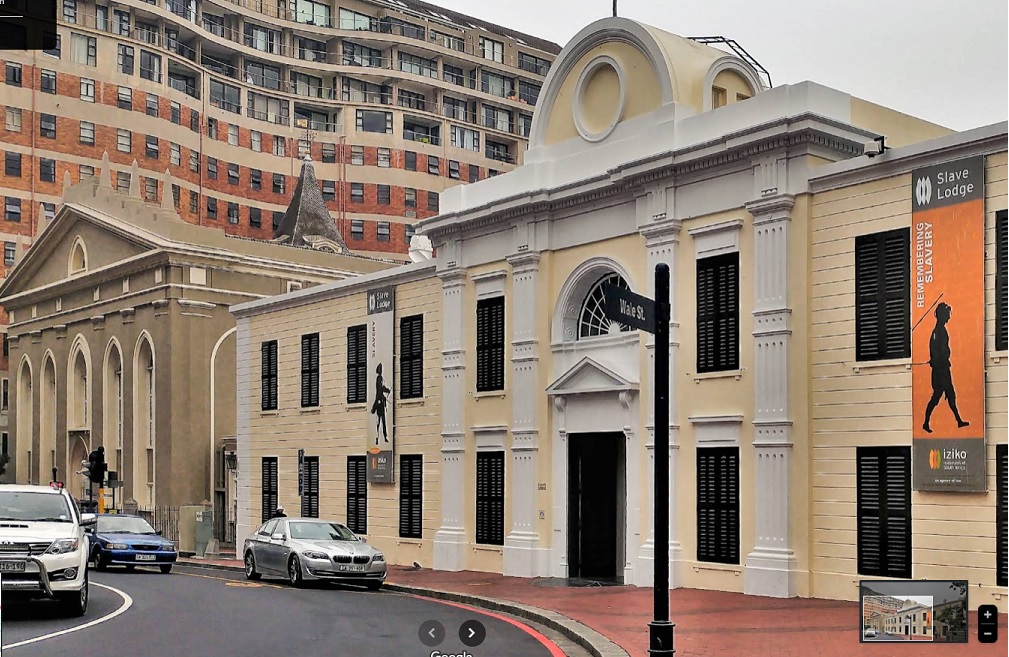
On Monday, July 28th, CTII’s School’s Program began by meeting at the Slave Lodge, one of the oldest standing buildings in Cape Town. Students had the opportunity to tour the museum with guided question sheets to encourage reflection. As we walked around, I heard students relating to the content through the lens of their own experiences and education around slavery. It was encouraging to see students thoughtfully engaging with the content, asking profound questions, and attempting to locate the legacy of slavery in their contemporary context.
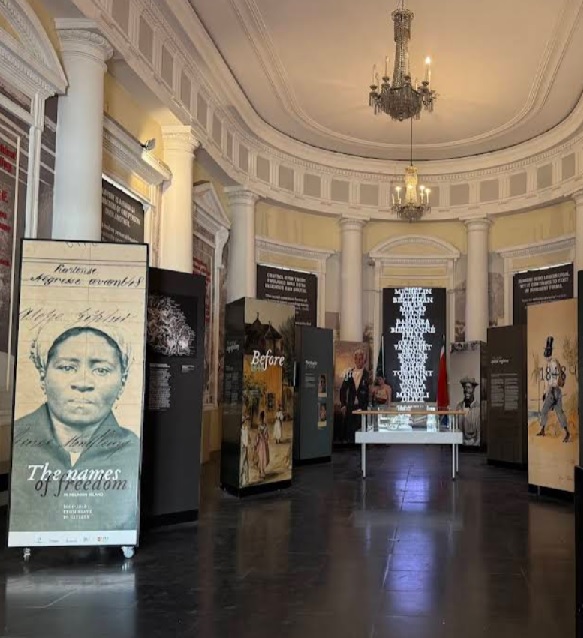
As an African American, my own society has been deeply traumatized by the history of slavery. Experiencing the slave lodge, it became evident that the depth of suffering has left a remarkably similar scar on South African society. I’ve been stunned by both the similarities and the differences in how slavery was enacted as a mechanism of dehumanization, oppression, and violence in South Africa and the US. I was particularly gripped by the month naming conventions adopted by enslavers here, and was shocked to hear how common it is to have neighbors, family, friends named January or February. This demonstrates the depth of objectification and brutality of the slavers.
However, in that same vein, I was profoundly moved by the reclamation of these names in contemporary society, as it exemplifies how ownership of one’s story can be a transformative force.

After visiting the slave lodge, the students engaged in a conversation with Pastor (or locally, Dominee) Riaan de Villiers, who toured the students around the Groote Kerk, a key congregation complicit in the power structures of apartheid. Pastor Riaan explored the history of the church, expounded on slavery in Cape Town, and examined the role of compassion and humility in leadership. Students were able to ask questions to examine further how Groote Kerk has been transformed from an institution of oppression to one of liberation.
Key to these efforts has been Groote Kerk’s recognising a seminal indigenous figure, Krotoa. The church commissioned a painting “A Portrait of Krotoa-Eva” by Khoi artist Dieuwke Jean Linee featuring a sort of conversation between her indigenous and colonised selves.

The intellectual fallacy that freedom and social mobility are available to all perpetuates the belief that slavery is a relic of the past when, in reality, the reverberations of its horror are felt and embodied today. Black and colored populations are traumatized by the injustices and terrors inflicted upon them, and white populations are also cursed by the legacy of such abuses. Our ancestors and descendants cry out in collective grief; however, I find that there is hope in healing.

In the aftermath of the Schools Program, the lesson became quite clear- historicising and story-telling are critical tools for social and racial healing in Cape Town. Engaging youth in this struggle and placing them in the chronology of this legacy is essential to the future of the country. In many torn societies, healing comes from looking to the past in order to look toward the future. Re-historicizing slavery in a post-apartheid South Africa presents an opportunity to find a new model for trauma healing in a world desperate for conflict transformation and restorative justice.
