World Interfaith Harmony Week: A season to give

It’s February the 1st, and big day for us at the CTII.

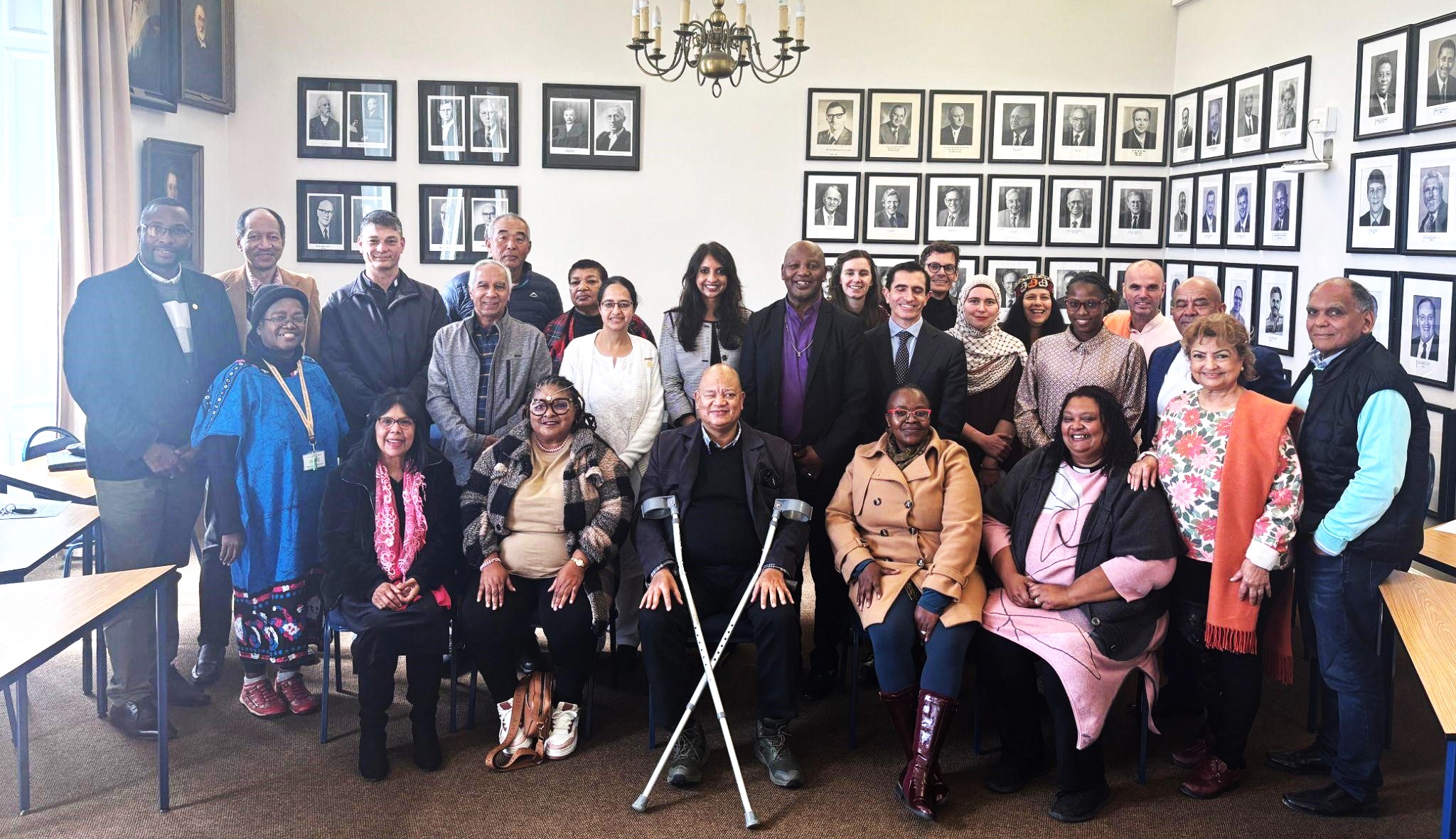
For one, it’s the UN World Interfaith Harmony Week. We have a strong tie to this event: in 2019, the CTII were the joint recipients of its prize, for our “Prayers in the City” held in Elsies River (together with FHLM), a grassroots version of what had been a regular annual event. (The banner picture for our site is from this event).

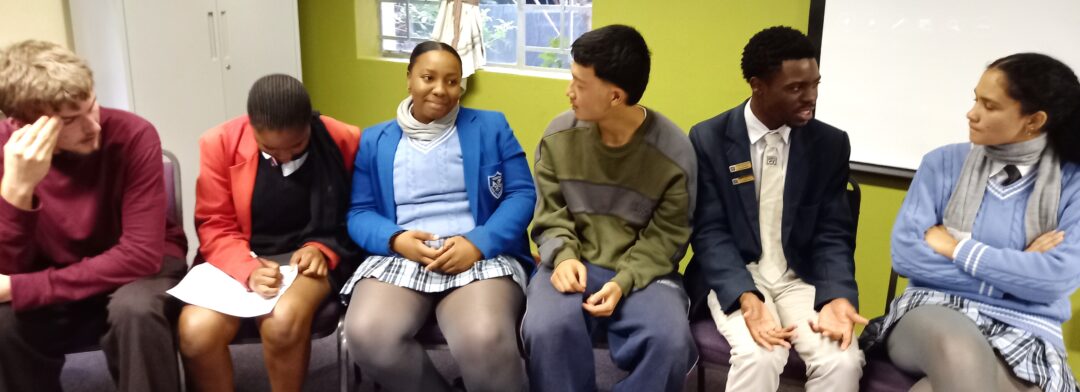
Secondly, we have launched a 2-month fundraising campaign “CTII Schools Project 2026” on the BackaBuddy platform in which we hope to enable our very successful Youth Interfaith Program (YIIP) to run this year. This is a new step for us; up until now our funds have been via private donations.

We now want to expand our reach to meet the demand for interfaith education and organisation, and actively take up our responsibility as a competent and empowered NGO. Our goal is to raise R120,000 to make the two-year Schools Program possible for 70 Grade 10 and 11 learners in 2026. It costs approximately R1700 per learner.

As a key evidence to the effectiveness of the 2025 program, here are 2 quotes, from a Muslim and a Jewish learner respectively:

“Before I entered the Interfaith Programme, I pretty much saw my religion … as the only correct religion … But interfaith really … changed the way I viewed life. The Programme really helped me create friendships… those are friendships that will last a lifetime.”

“It taught me that different faiths don’t have to divide us, they can bring us closer through understanding and respect. I’m grateful to have had this opportunity to learn, to connect, and to see the world through new eyes.”

Interfaith is, by its very definition, an act of giving. Falling between recognised religious groupings, it can be viewed with skepticism and even suspicion. Believers are not quick to associate with those outside their circles, and religious leaders are often duty-bound to keep people inside their folds. To merely be present to “the other” requires a generous heart.

Giving is a universal virtue. And there are many ways to give. Pippa Jones quotes a profound teaching by August Gold of the Sacred Centre New York. Simply put, it is list of 4 ways to give:

  • Time
  • Talent
  • Ties
  • Treasure

Time means overcoming your busy-ness for the greater good. Being available, available for works of service, for prayerful considerations, for beautiful, or for brave conversations, for building a friendship.

Talent means bringing your strengths, your experience and expertise, and using these to build community. True leadership is not about gaining an upper hand in a game of power, but in doing the thing in which you excel. It also means collaborating where your talents might be limited.

Ties are our connections, the heart of ubuntu – I am (a node) because we are (a network). When we share not just what, but who we know, magic often happens. The sum becomes greater than the parts, and we can as the African proverbs says, go far together, not just fast, alone.

complete your task
seek no reward
make no claims [Daodejing 30]

The CTII is a thriving organization precisely because it is comprised of volunteers having given freely of their time, talent and ties. Our big challenge now, especially with our flagship YIIP program, is funds.

Treasure, then, is our resources in goods and money, are often the weak point in the life of NGO’s. Traditional religious organisation have their ways of doing this, for example through Christian tithing, Islamic sadaqah and zakat, and even barter-like giving systems like the Buddhist dana.

“The example of those who spend their wealth in the way of Allah is like a seed which grows seven spikes; in each spike is a hundred grains…” [Surah Al-Baqarah 2:261]

And sadly, due to many kinds of corruption, money it is too often the cause of great suffering and disrepute rather than the alleviation of that suffering.

So, despite these challenges, we are embarking on a program of fundraising and we invite you to be involved. You may be well-off and can afford to support us. Please do and take direct part in a better future for our world. Or you may have little or nothing in the way of money to contribute. There is no shame at all in this.

“All these out of their abundance have put in offerings for God, but she out of her poverty put in all the livelihood that she had.” [Luke 21:4]

But together, via our pooled resources – time, talents, ties and treasure – we can reach our target and continue building the interfaith and intercultural leadership of tomorrow.

Thank you for reading, and may you have a blessed week of harmony!

WIHW winning event, Elsies River 2019

Youth Interfaith Intercultural Program Report 2025

2025 was an exceptional year for the CTII YIIP, or Youth Interfaith Intercultural Program.

Director Pippa Jones has put together a well illustrated report detailing the program, its background, and its participants.

The YIIP is an impressive achievement with a solid track record, and is poised to really make a difference in a world that desperately needs what it offers.

What the program now needs is funding, to take forward a well tried, effective model. We will be launching our campaign shortly, and hope that you will be involved.


Country Roads: a Reconciliation Day interfaith meander

On Reconciliation Day, December 16th, we have traditionally in Cape Town have organised an Interfaith Walk in District 6. But over these 3 years this became beset with various problems, not least the changing behaviors post-covid and the current divisive world climate.

So yesterday, myself, Cecil Plaatjies, Nic Paton, Aidon Allies, Marie-Therese Nga set out for Mamre to visit the Seutloali family. We took a different route from usual and meandered through upmarket suburbs, vast tracts of farmland, past farm workers’ homes, growing townships and forgotten areas with meaningful names like, Atlantis.

A journey that points to so much that should still be reconciled in this country. Along the winding roads north of Cape Town, we reflected on spatial division, and how many have been flung to outlying areas, with not much access to amenities and opportunity.

It was my second visit after the devastating fire which destroyed the Seutloali homestead. (See “Rising from the Ashes”). We were met with broad smiles and warm hearts. It was a lesson in resilience, hope and victory of the spirit. The Seutloali’s are rebuilding their home and planted crops again.

The homestead

We spent the afternoon in conversation and encouraging each other, and also got to meet another family from the community who came over to visit.

How we spent Reconciliation Day

Interfaith is often viewed as a public event consisting of many different religions on the same platform. Person-to-person dialogue does not make good copy. It is invisible, not easy to quantify and label, but it is a model of real peace work and reconciliation. Something that should become part of our daily interactions with each other.

Without planning or ceremony, we found ourselves having been meaningfully involved in an act of Reconciliation.

African Traditional Spirituality – Schools Program

2025 is the second year that African Traditional Spirituality has been part of the Grade 10 CTII Schools curriculum. A deep dive into Interfaith, especially within the African context, must include an exploration of the traditions, practices and rituals that have existed for millennia. To that end, CTII is honoured to have the support and input of Dr Christie (Gogo Bazimile) van Zyl who works as the University of Cape Town’s first indigenous healthcare advisor within the Student Welfare Services.

Bronwen Foster

First, we made the most of our beautiful surroundings. We had decided to hold the session in the Rondevlei Nature Reserve (25 Aug 2025) to provide our learners with the opportunity to feel closer to our natural environment. We were generously welcomed by Bronwen Foster, Conservation Officer for The City of Cape Town, who spoke about the importance of nature reserves and protecting the environment for the good of all.

The evidence of how we humans and all other species often co-habit unsustainably was clear: the encroachment of urbanisation, development, and waste upon the wildlife and indigenous plants of the vlei was obvious to all. We were reminded that ubuntu is in fact our relationship with everything, and our inter-dependent connection with Mother Nature.

Dr Christie then expertly and lovingly led the learners on a journey of discovery. She held space with great warmth, knowledge and understanding. Her presentation grappled with our complex history, unpacking what African Traditional Spirituality is and the effect that colonialism has had, while also interweaving her own personal stories of struggle and re-learning. A dynamic Q&A session then ensued. We were impressed by how engaged all the learners were – it sparked rich conversation that continued long after the session had ended. Clearly a deep chord had been struck.

One of our guests to the afternoon was Veliswa Ntsume, a mature student in Christian theology, who remarked:

”These sessions are of great significance to our young, to sharpen their sense of belonging, to iron out any identity-related confusions, and to invite their curiosity and hunger to learn more about themselves, their ancestry and traditions”.

Veliswa Ntsume
Teachers and supporters: Veli Ntsume, Dr. Christie van Zyl, James Guebert, Whitney Hedlund, Nora Grīnberga

Melanie Slavin, one of the staff from Herzlia, who has been with the Programme since its foundation in 2011, was particularly moved and inspired by the experience.

“I often think of the intergenerational trauma that exists in South Africa and we carry a burden because of it…I have never really confronted the profound impact of the denial and loss of indigenous spiritual systems on people- the severing of connection to spiritual ecosystems  that imposed  individualism and dispossession on a very deep cellular level.”

Melanie Slavin, Hertzlia

 Ann Paton, member of CTII, volunteer on the Youth Programme, and trauma counselling specialist was struck by the questions which the session raised: how do we reclaim that which was discarded and disinherited? A disinheritance which is both subtle and unsubtle. How does one come back to a full identity and allow an ancient knowing? As Ann remarked,

“Today we are all a mix of so many traditions; we are, in essence, interfaith.”

Ann Paton

We were treated to an opportunity to really see, hear and know one another as Africans. The session with Dr Christie gave African Traditional Spirituality its proper place and belonging. So much of our national and global healing, and what is necessary for humanity, rests on the resurgence and preservation of this ancient knowledge. The respect and awareness generated that day was a gift for us all to carry forward in our journeys, both individually and collectively. It’s a hard journey and a brave journey, but a necessary one.