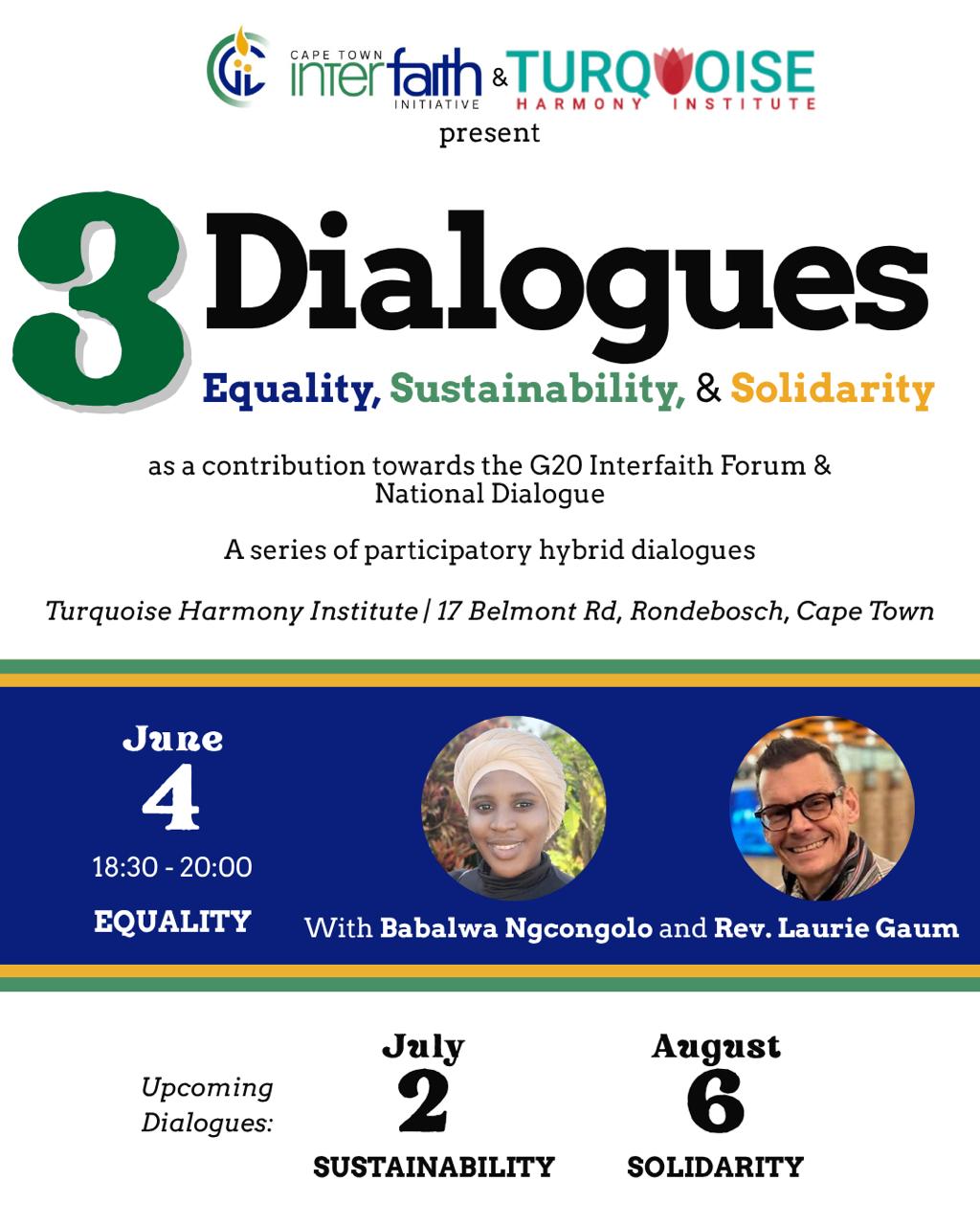
The first of 3 dialogues on Equality, Sustainability and Solidarity took place last night at Turquoise Harmony Institute in Rondebosch. Together with the CTII, these events are series of participatory gatherings as contributions towards the G20 Interfaith Forum and the National Dialogue.
While not officially requested by these organisations, it was a grassroots effort to highlight the pertinent themes declared by the G20 IF, and the first event dealt with Equality.
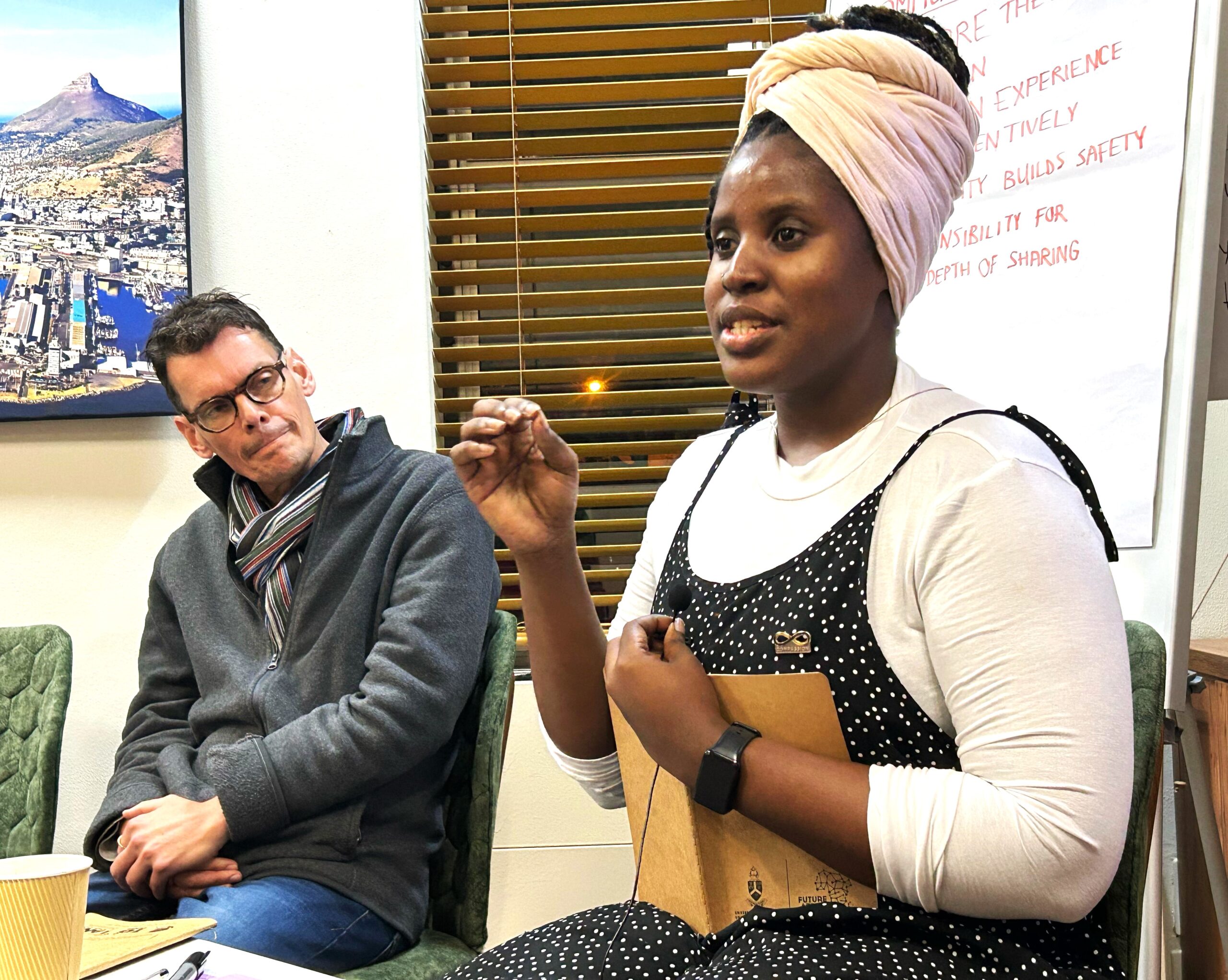
CTII board members Babalwa Ngcongolo and Rev. Laurie Gaum spoke, and then lead the participants into small dialogue groups that spanned many dimensions of difference. The diversity of perspectives, cultures and religions created a receptive and participatory field for all concerned.
We did not want to perpetuate a structure which emphasised speakers and de-emphasised listeners. Although we took the topics given “from above” as it were, we wanted to arrive at our own conversation in the connection of the moment, and that happened. We also wanted to “re-imagine” those topics, and as far as equality goes, it is conventionally understood through an economic or legal lens.
The tone was set by Babalwa. She brought story and compassion into focus. Exploring the isiZulu greeting “Sawubona”, meaning “we see you”, she showed that more than a formality, it is in fact an invitation to curiosity. A key question must be, can I see you as my equal? If not, we cannot fight for justice.
Our stories are our relationships over time. Do we possess the insight of how our stories relate to one another? The success of the TRC (Truth and Reconciliation Commission) has been debated, but at least it shed some light on unspoken and dark aspects of our national story. Reconciliation still seems unrealised, but perhaps this is failure not of government but of the citizens not valuing their stories and not finding ways to share these. For Babalwa, reconciliation is the practice of relationship.
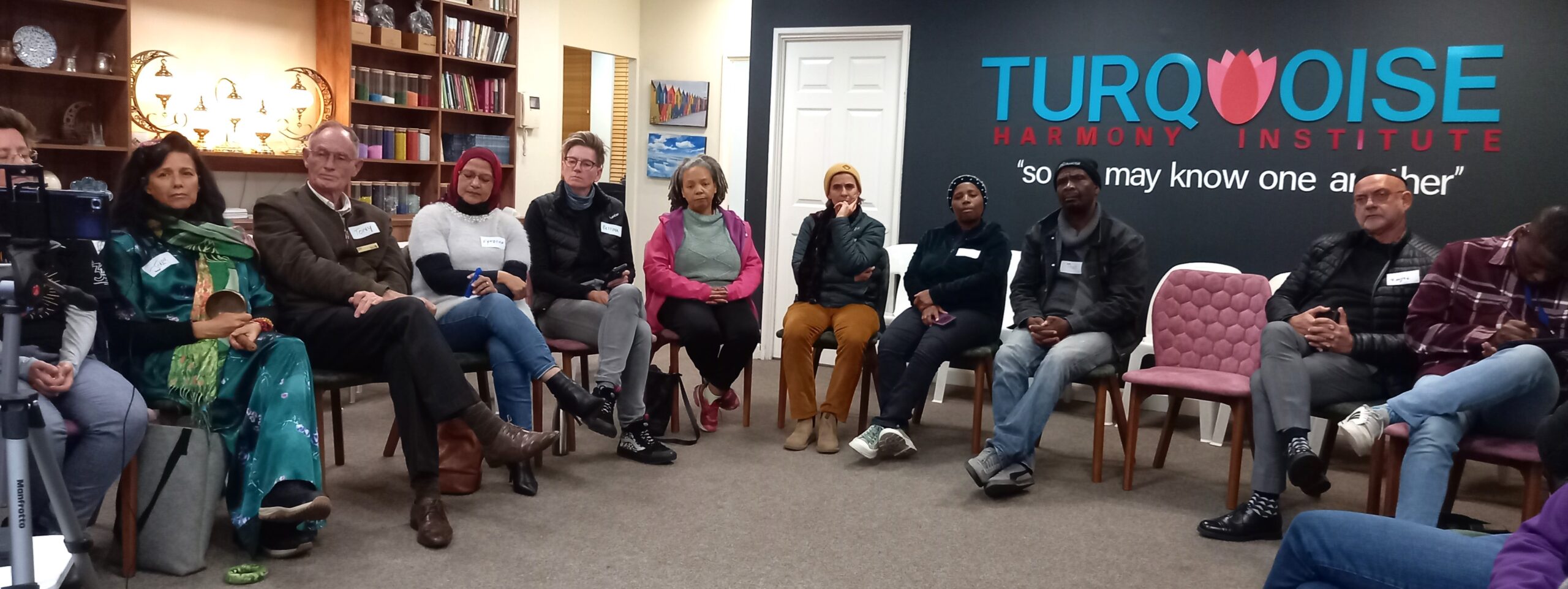
Laurie then led us into a direct reflection on poverty. He mentioned the recent South African delegation to the White House, in which Trade Union leader Zingiswa Losi admitted the simple truth that South Africa is a violent nation. This plain admission, said Laurie, points to the devastating effects of poverty, and spoke of “poverty as trauma” (quoting Lucille Meyer).
According to the recent World Happiness Report South Africa comes 95th of 147 measured countries. The key thing to note here is that happiness does not correlate directly to wealth per se, but to wealth distribution.
Laurie has championed dialogue for many years, especially as far as gender is concerned, and brought skill to the space. He set the tone for how we conduct dialogue in community: a shared space free from domination, not making it a discussion but centering on own experience, and taking responsibility rather than deflecting blame onto others or into abstractions. As grassroots members of civil society, we should trust the “expertise of our own experience”.
Several online responses were forthcoming, including from as far afield as Latvia, and from some areas that even that very day had experienced deeply traumatic levels of violence. Members of chaplaincies in places like the neighboring Cape Flats, offered input from the heart (thank you Rev. Dorothea Gopie)

Wayne Alexander noted that the confidence to tell our story is key. We should be aware for ourselves and others, about how safe we feel. Only by building trust and relationship can we start of come out of our sense of inferiority, that our story does not matter.
And Theo Mayekiso echoed this relating several times that “lesser” participants were given less heed; our spaces contain implicit judgements. We have to be aware of these, and also of the fact that many who appear to be insiders actually feel like outsiders.
In this world-moment of demagogues, so-called “strong” leaders, where the unquestioned superiority and the supremacy of elites have side-lined the voices of common people, dialogue is the only way forward towards a more just and equitable world.
Babalwa summarised it in 3 points:
- Our interfaith must build equality and is not be merely representational.
- The narratives we share must be inclusive and fair.
- Embrace the teachings of compassion; come to the aid of the other.
The next dialogue on “Sustainability” will take place on the 2nd July.