
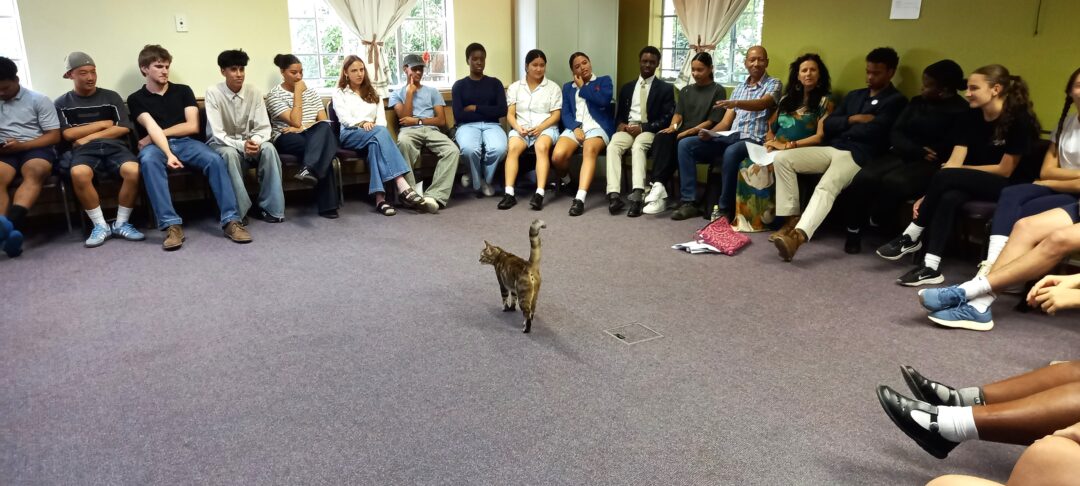
Jenny Canau, Cecil Plaatjies, Ann Paton, Aidon Allies of the CTII, together with the Sasnev cat led a fascinating session on nonviolent communication (NVC) as session 2 of the YIIP 2026 Grade 11 program.
Regulating
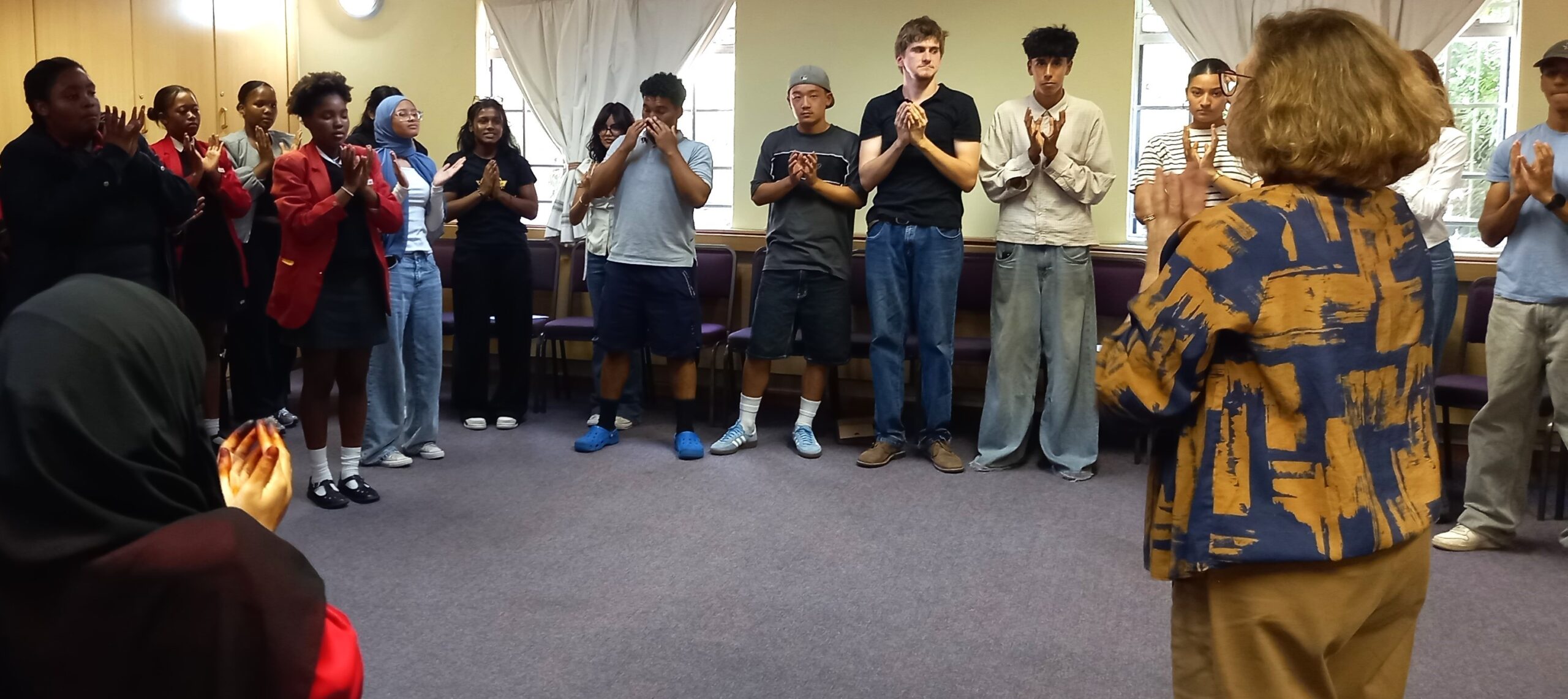
Ann started by leading a “regulating” meditation in which we were invited to be aware of our bodily, mental and emotional intelligences. By centering ourselves and attuning to the nuance of what is present for us, we can more skillfully navigate our way forward. We can interrupt our patterns; breath work, shaking and Tai-Chi are all ways to allow our bodies to teach us. We might experience uncomfortable feelings or underlying traumas, but by paying attention we can learn from our bodies about ourselves.
Violence and Ahimsa
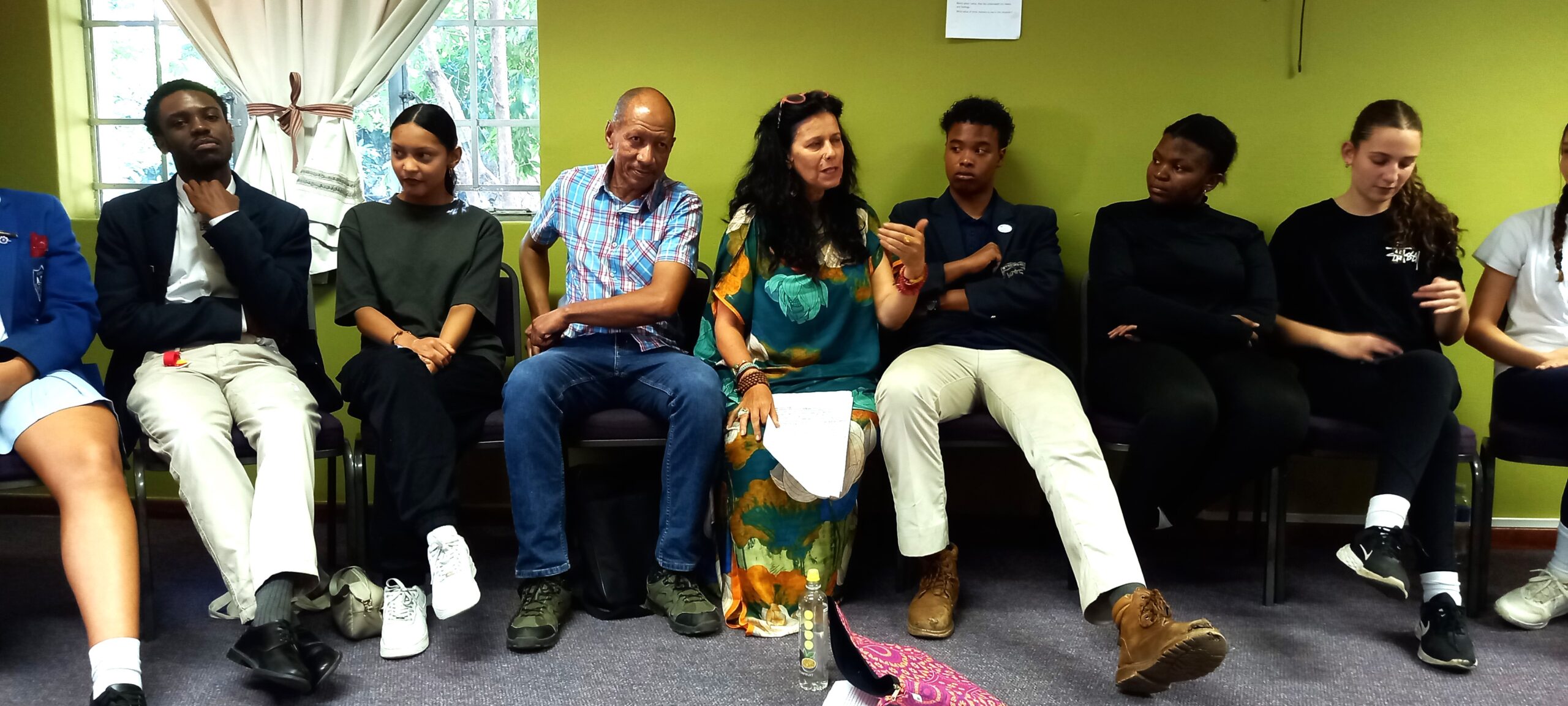
Cecil spoke to the crucial question of violence, as well as its antidote, non-violence. He asked the learners for examples of types of violence or harm. Answers included gender-based violence (especially against women), on-line meme violence, racism, gang violence, ecological neglect, and of course, war.
When asked for famous proponents of non-violence they recalled Gandhi, Martin Luther King, and Nelson Mandela. Cecil reminded them of the Russian writer Leo Tolstoy who was a major influence on all these late 20th century peace luminaries (and the learners also viewed lead YIIP coordinator Pippa Jones as a key South African peace activist!)
Many names deserved more time: Desmond Tutu, Thich Nat Han and the Dali Lama are 3 that come to mind. The whole issue of ahimsa (to use Gandhi’s Sanskrit term for non-harm) is a very deep one and it is hoped that this cohort can delve deeper into this over the next year. Contemporary writers on interfaith and peacework include Karen Armstrong and her background to religious fundamentalisms and the relationship of violence to religion are foundational texts.
Playing the game of non-violence
Jenny introduced a very practical game via which the players could apply some key concepts of non-violent communication. These are Observation, Judgement, Feelings, Needs, Values, Requests and Demands.
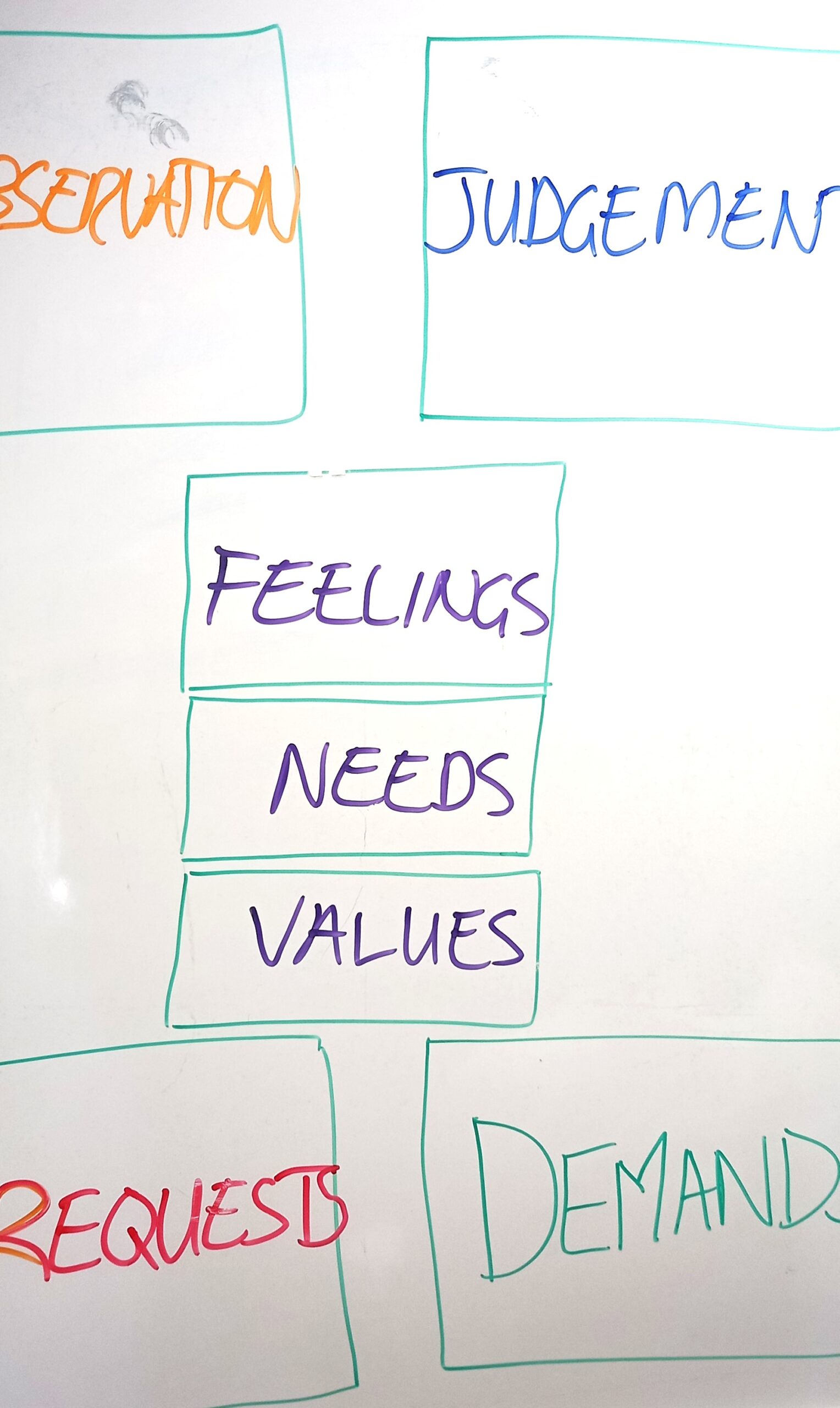
The first distinction we should make is between observations and judgements. An observation is where we talk about a situation objectively and dispassionately and do not bring our values into it. A judgement is where we do. All humans are prone to judging, and some judgements might be directed at ourselves, or presented as our opinion. But where this is not the case, we can cause harm, or violate relationships.
Judge not, lest you be judged
Yeshua, Matthew 7:1
We then should distinguish between feelings, needs and values. Most communication is not entirely through words, but through the emotions attached to them (or even without them). These feelings can be positive – joy, affection, appreciation – or negative – despair, disdain or hatred. We should recognise that our feelings are attached to our needs. Examples:
- We feel offended by disagreement because we need to be right.
- We feel angered by a challenge because we need to feel secure.
- We crave attention because we need to be recognised.
These are our unique needs and not necessarily related to the other, and yet we tend to react to that other when our feelings are aroused.

Then, we should recognise that our needs are based in our values, or beliefs. These can be hard to understand (and sometimes only come home to us much later in life), but our often-unstated beliefs drive our needs and feelings. Examples:
- We need to speak out against injustice because we believe in fairness.
- We need to protect ourselves or our communities because we believe in the rule of law.
- We need to dominate or enforce our control over others because we believe in our being superior to them.
Lastly, we should distinguish between requests and demands. If I say to you “I want to resolve this issue. Can you meet me at 2 pm?” it looks like a peacemaking gesture. However, it is in fact a type of demand: it meets my needs. To be more deeply peacework, one should express this as a request: “I want to resolve this issue. If you do, when can we do it?” Your basic sentiment is the good of the other, taking their needs into consideration, not merely your own needs on your own terms.
“Do not impose on others what you yourself do not want “
Analects of Confucius 15:23
Finally, the learners were given an opportunity to exercise them in a game in groups of 3. One person was the subject (protagonist), another the silent witness, and a third the helper with the “rules”.
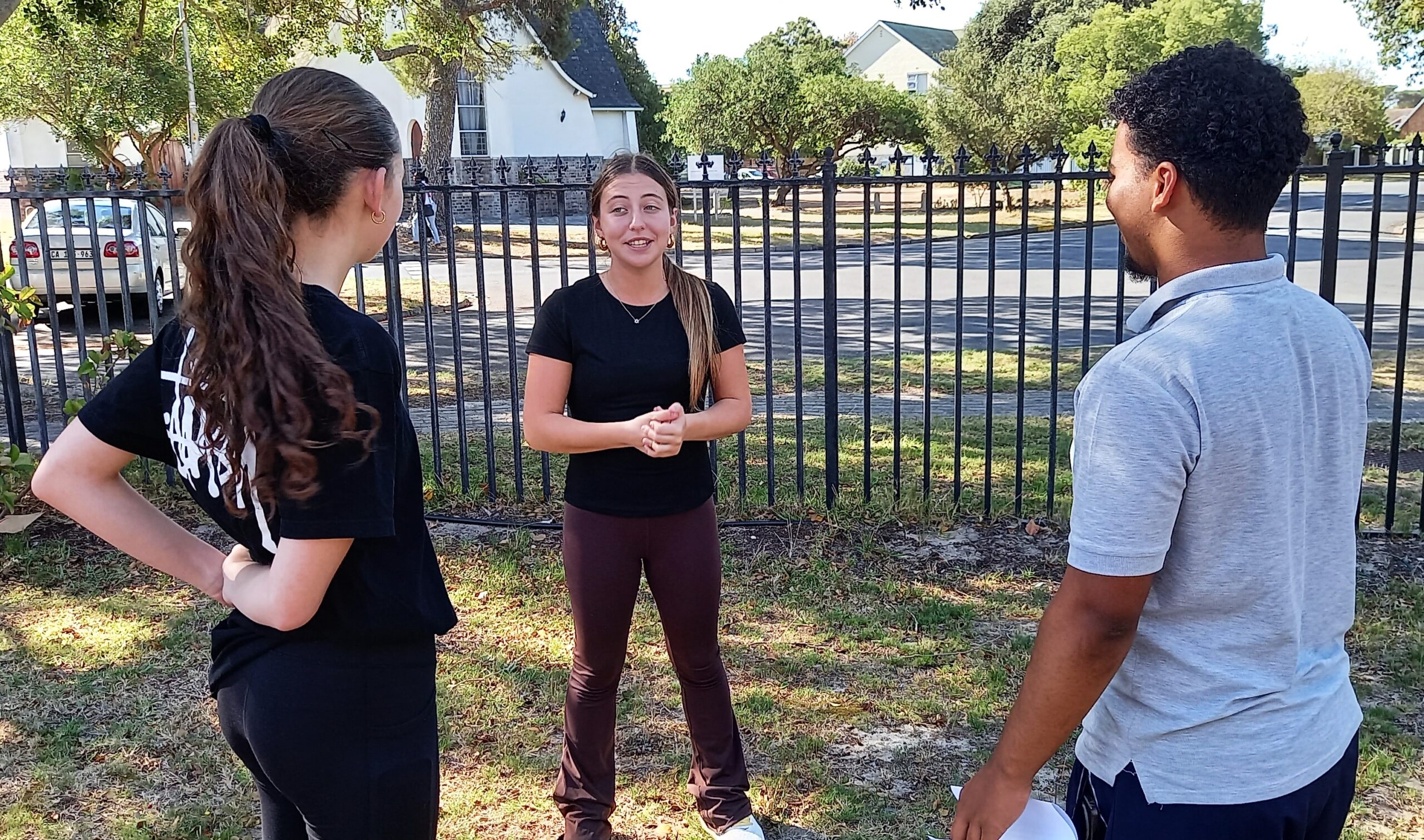
So, there many shades and layers to peacework and by applying these NVC principles consistently to our own interactions, we are practicing non-violent communication. A good start!
Well done to the learners, leaders and all helpers who contributed to a successful session that hopefully forms the basis for the rest of the program; addressing the violence in this world must be the key project of the interfaith movement.
Fragile (song by Sting)
If blood will flow when flesh and steel are one
Drying in the color of the evening sun
Tomorrow’s rain will wash the stains away
But something in our minds will always stay
Perhaps this final act was meant to clinch a lifetime’s argument
That nothing comes from violence and nothing ever could
For all those born beneath an angry star
Lest we forget how fragile we are
On and on, the rain will fall
Like tears from a star, like tears from a star
On and on, the rain will say
How fragile we are, how fragile we are

I think that Non-Violent Communication is an essential teaching for all humans. I’m so glad to see it being used in this group, including for young members. These skills are so important for our lives and healthy connection with others. I wish I had learnt NVC in school.
Excellent write up! Thank you Nic! And gratitude to all the facilitators and to those participating in the event.