
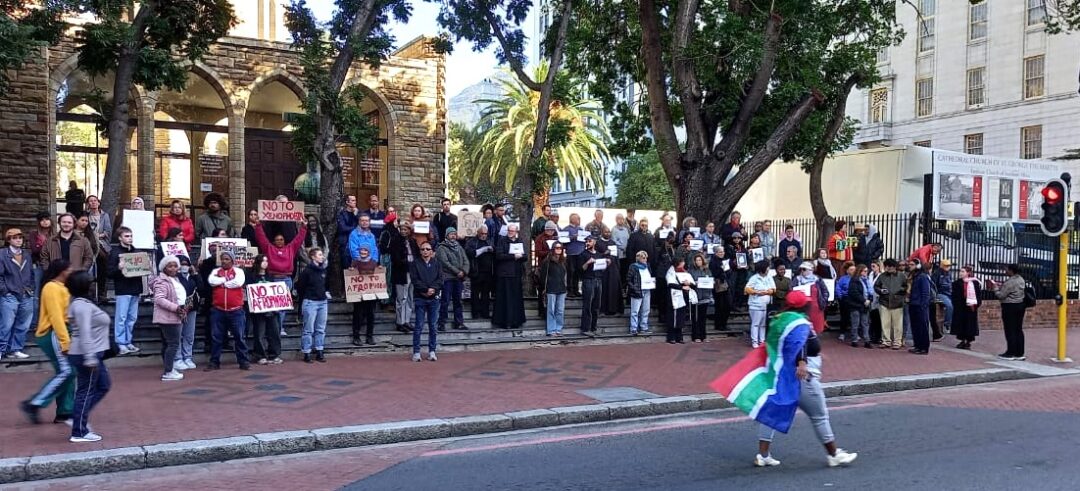
A small group of concerned citizens and spiritual activists gathered on the St Georges cathedral steps for a silent vigil today, 30 June.
This is the unofficial “deadline” from some quarters for undocumented immigrants to return to their countries of origin.
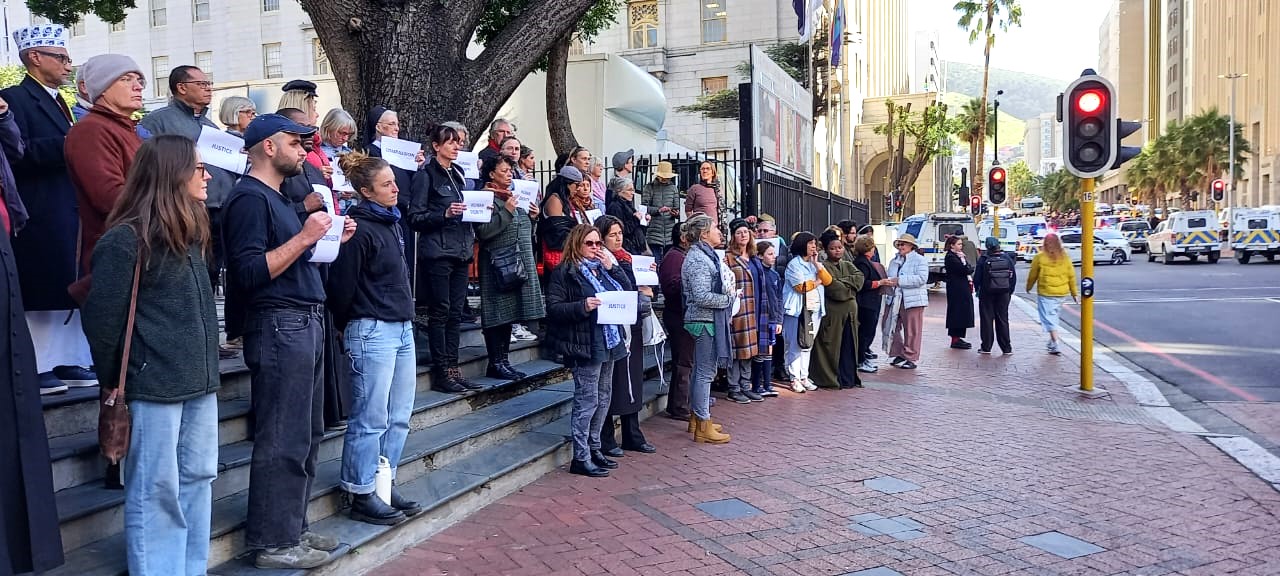
A “March and March” gathering convened in Wale Street, a block away from St Georges. They sang and chanted with gusto before moving past the cathedral, stopping in front of us. It was a mismatch of note, the one ethos disruptive, loud and confrontational, and the other a small and silent witness to values of compassion and peace.
It was curious that if there were “2 sides” here, the competition was to “out-film” the other. Questions of who was doing what flew through the mind, the protestors using their “sweep away” gestures and the contemplatives a ragged group of religious and spiritual peaceniks, including several prominent religious leaders.
Our symbols and their meanings seem up for grabs: what does the SA flag – very visible amongst marchers – represent? Is it the rainbow nation built upon reconciliation, or are we yet another state succumbing to bigotry?
The evocative song “Senzenina” which rang out from the gathered crowd, means “what have we done?”, a struggle-era anthem of victimhood. Yet this applies equally to how we treat our neighbors. Who is the “us” we are referring to?
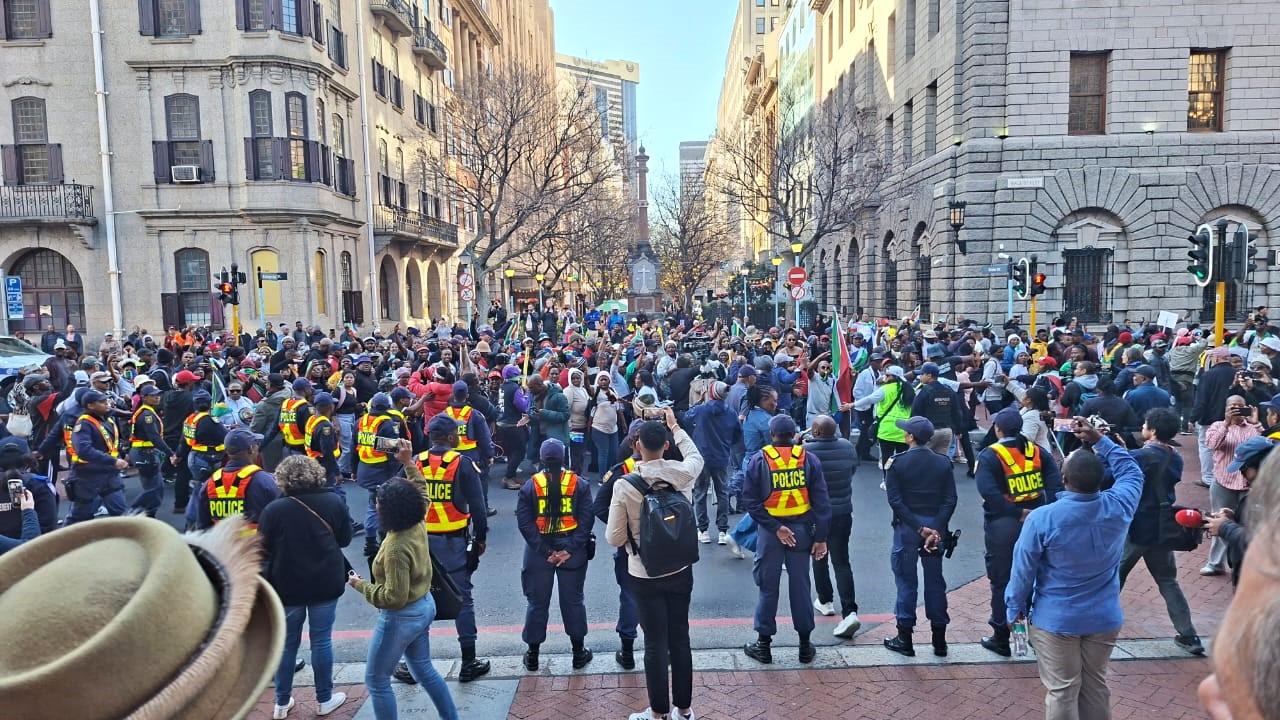
Faith and Interfaith communities including the CTII took part and countenanced the raw power of the demonstrators over a cordon of police. Had they not been there, we wonder what sort of expressions the not-so-latent aggression might have become.
Ultimately, at least in Cape Town, the march proceeded peacefully. As one raised during the repressive Apartheid years, I still have a sense of awe that this sort of public expression of discontent and protest is possible. 40 years ago, such freedoms were inconceivable.
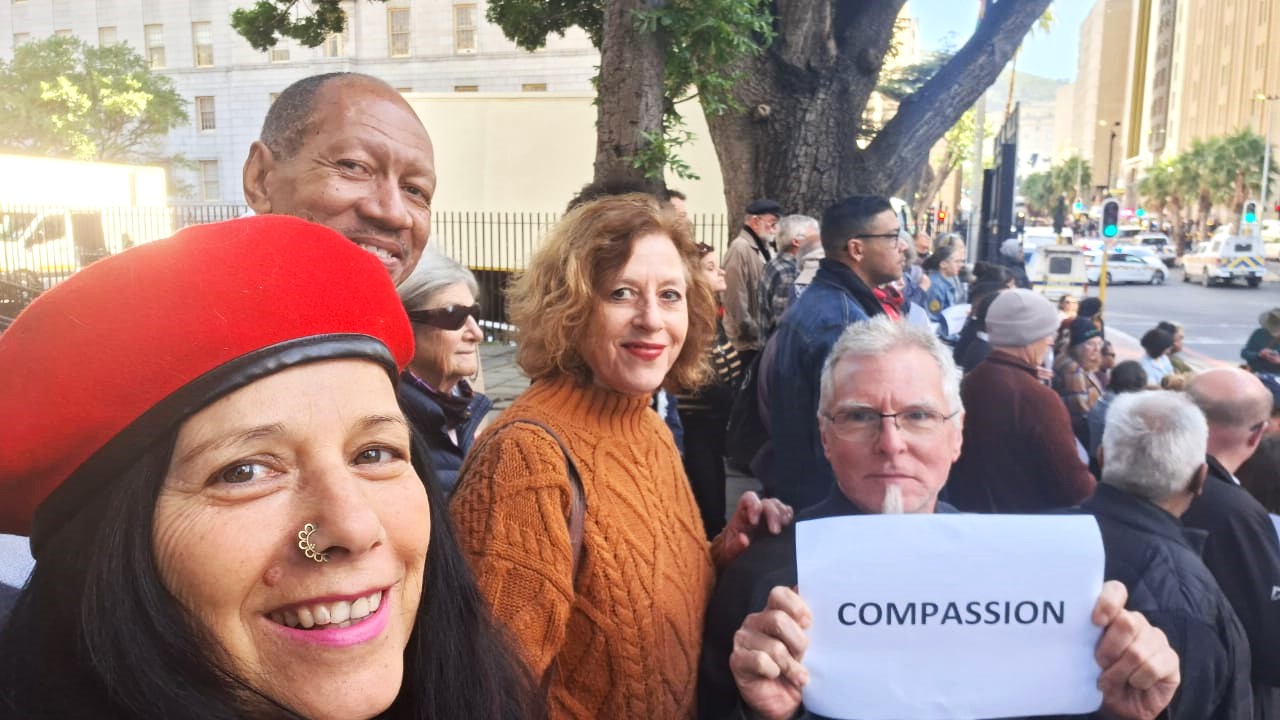
The question that crossed minds was how do “they” see us holding humble words including “ubuntu”, “compassion” and “peace”. Are these perennial values now seen as vices to some?
The work of “repairing the world” is upon us. Service towards our fellows, and the creation of a more just, peaceful or compassionate world are not values upheld at present. The dearth of meaningful leadership, and the presence of toxic myths of superiority and separateness abound.
Communities of faith and workers for peace will need to understand the desperation that drives people to deem others as enemies, and find ways to continue the work of healing.
