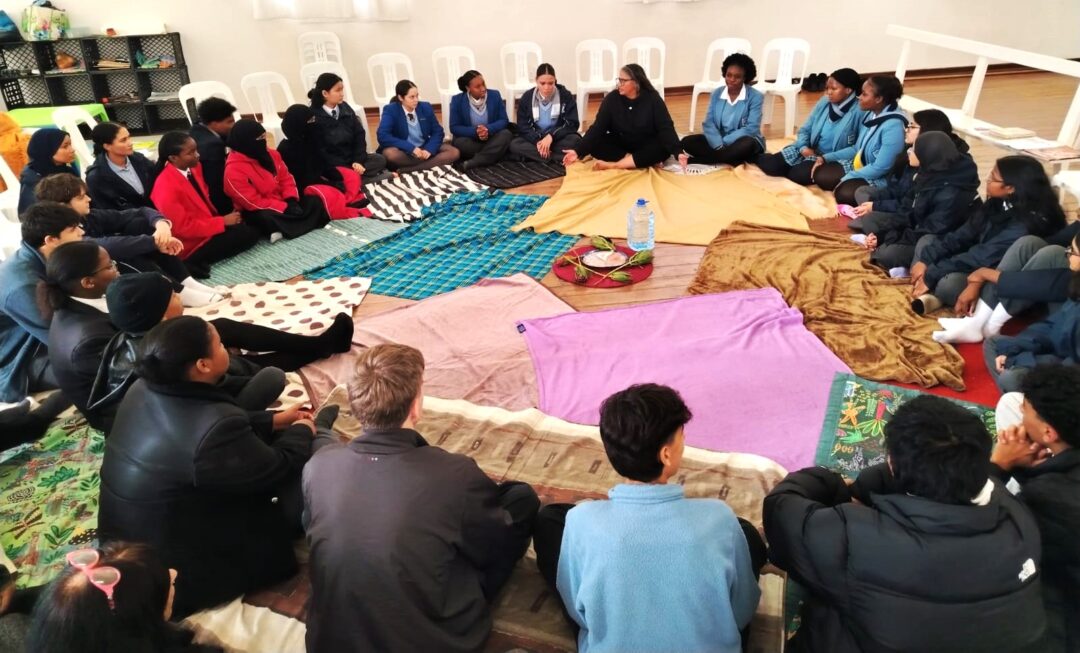
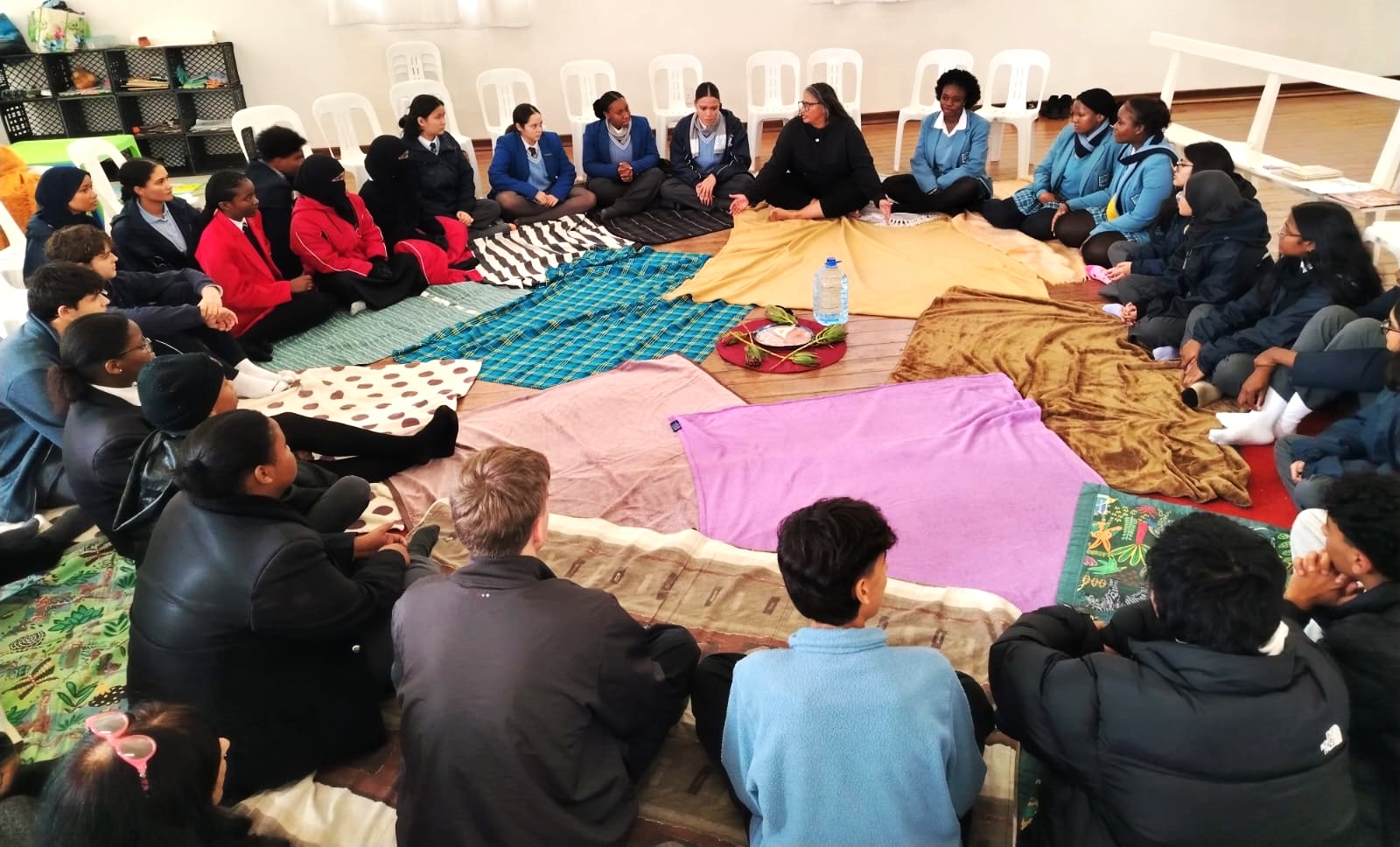
On Monday 23rd June, our Youth Interfaith Intercultural Program offered an inaugural session to the Grade 10 learners titled “Indigeneity and Identity” – an extension of the deep and essential conversations we had during last year’s Camp.
We were generously hosted by Bishop Augustine Joemath who welcomed our group into the Moravian Church in District Six. Bishop Augustine, a tireless servant to the families and communities affected by the Forced Removals, spoke about the history of the Church in this area, tending to the wounds that persist. The Bishop has regularly supported interfaith activities in his Chapel, for example this one during covid.
Bishop Augustine Joemath
It was the perfect back drop to the session which Zebada January, Cecil Plaatjies and Pippa Jones co-led.
Zebada January
As a young person, I struggled deeply with my identity. The stories I was told at home didn’t match what we were taught in school. History lessons came from the perspective of those who invaded South Africa, claimed authority, and wrote books that erased our past. Those books told us that we no longer existed. That created so much confusion in my young mind. I felt disconnected from my land, my people, my tribe, and my culture—like I had been born without an identity.
But deep inside, I knew the truth. And that is that I am indigenous and that I am Khoi.
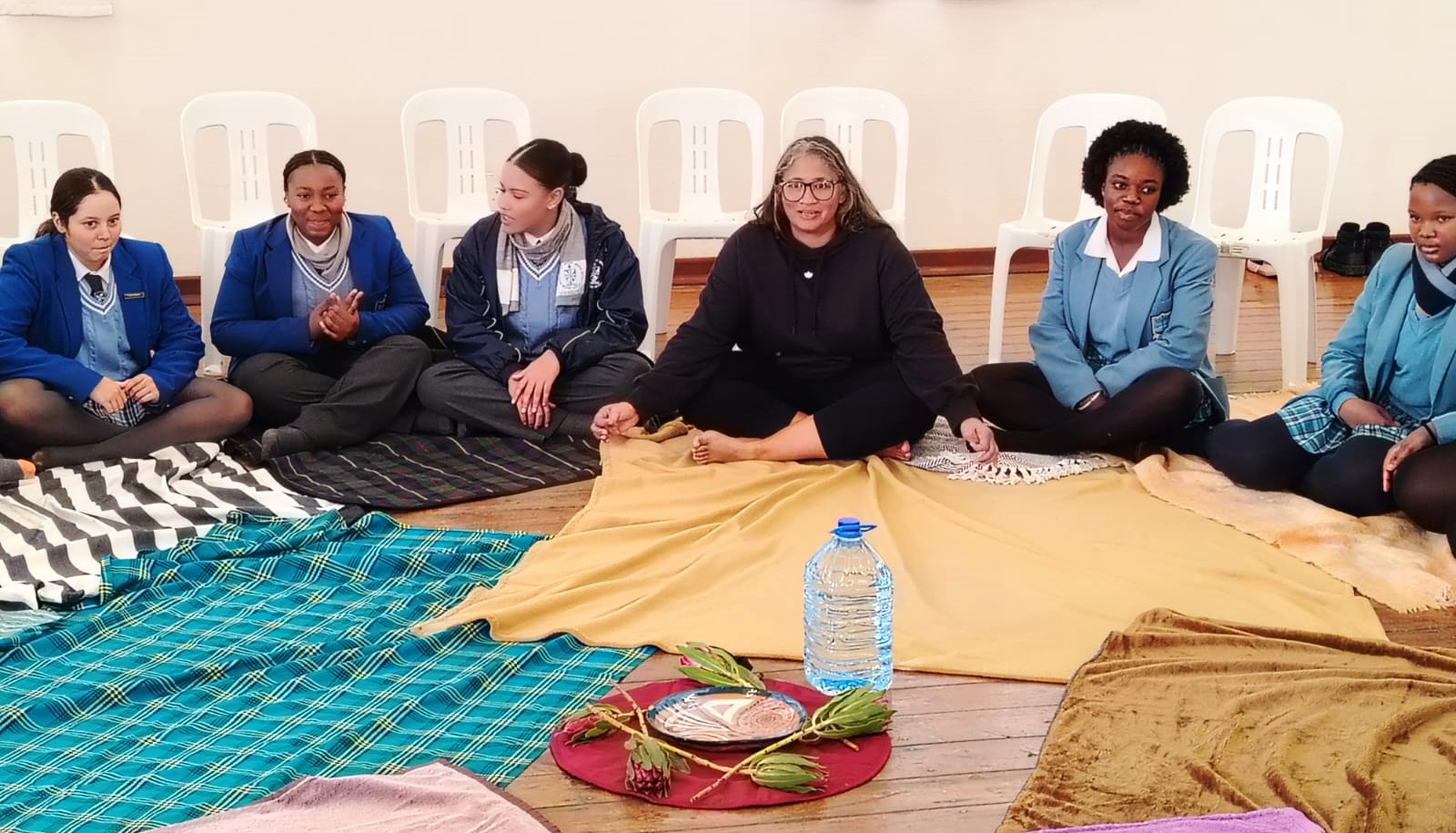
Zebada holds the circle
Some may ask, why advocate for something that seems like “nothingness”? But it is not nothing. It is the silence we were forced into. And reclaiming that space, that voice, is powerful.
I was a teenager once too, and I know how hard it can be to figure out who you are. For some, it’s a quick phase. For others, it’s a tough, painful journey. So often, we judge people by what we can see—by their physical appearance, how rich, how poor or by assumptions about their culture or religion and so on.
That’s why, during my session with the learners, I chose to be vulnerable. I invited them to tell me who they thought I was based on how I look, how I dress, and what they assumed about me. Only then did I share my real story. My truth.
The purpose of this session was to open a conversation about identity and teach them something powerful: There are still Indigenous people living in South Africa. We’re still here.
And more importantly, it’s okay to be on a journey of discovering who you are. It’s okay to not have all the answers. But we must learn to truly see each other—not through assumptions, but through curiosity, respect, and connection.
Cecil Plaatjies
I am a proud indigenous South African. This is a relatively new journey to me finding the ways to express that which was erased from our memory.
I took the learners on a short journey of my childhood in apartheid South Africa. I interrogated the false identities of race which still inform how we view and relate to each other today.
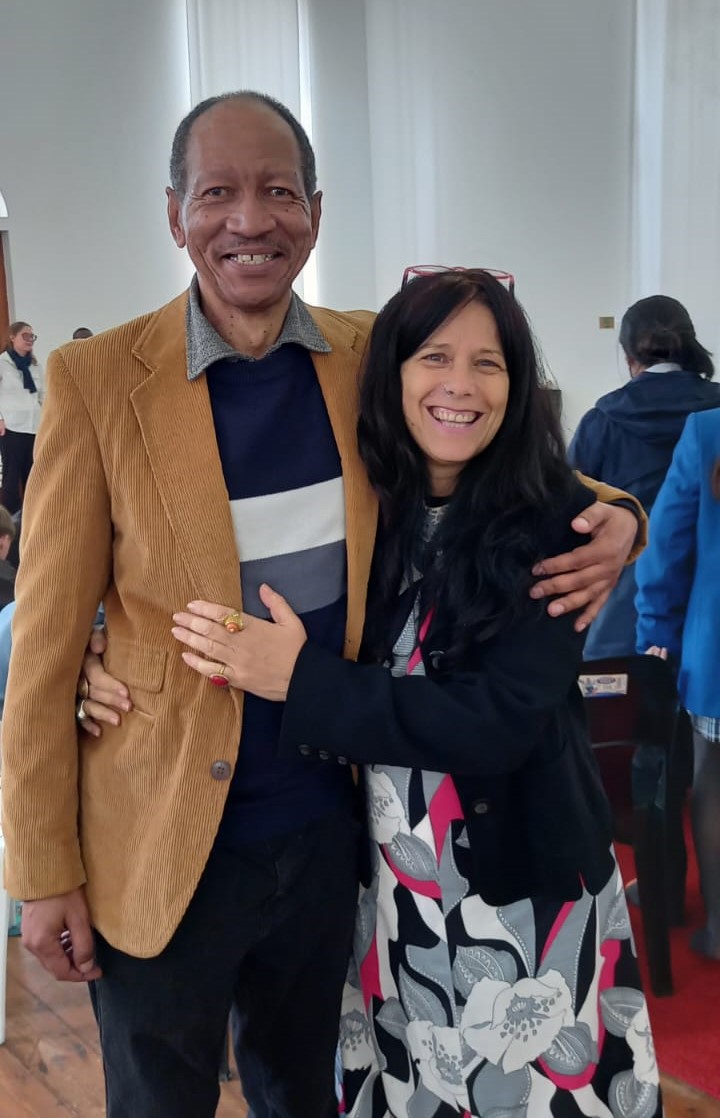
Cecil with Jenny
The Khoi and San once populated the continent and contributed widely to the gene pool of humanity. To an extent we are in denial of a people who made us all who we are today.
Visitors always say that our country is beautiful. Let us recognise the beauty within the people of this land, rediscover and celebrate it, because it is our common history.
Pippa Jones
As a white person who is deeply conscious of the legacy of my ancestors worldwide, of colonisation, violence in all its forms, disempowerment, exploitation and disenfranchisement, I have made it my life’s goal to move in the opposite spirit. Restorative justice and healing are complex and there is no quick fix. However one of the practices I seek to promote is Land Acknowledgement, something taught to me by Aboriginal elders in Australia, and something which modern Australian society has embraced in many of its public gatherings.
Why is such Acknowledgement important? For non-indigenous communities, land acknowledgement is a powerful way of showing respect, honouring all the ancestors who were in reverent relationship to land for millennia, and thanking the generations past, present and future for their custodianship of the places we now call home. Acknowledgement is a simple way of resisting the erasure of Indigenous histories, and working towards inviting the truth of history to be spoken and heard.
Pippa shares
Four years ago, Pippa and Zebada co-wrote a Land Acknowledgement for CTII:
We pause to recognise the ground upon which we are gathered today, here in the Western Cape. We acknowledge its rich and complex history, and pay our respects to its original custodians, the Khoi people of today, their ancestors and generations emerging; cousins to the San and to all those native to this nation – brothers and sisters of us all. We give thanks for their millennia of care of this land.
In peace and gratitude, we honour all peoples, all origins, all identities, all those for whom this land is home.
May the lessons of the past teach and guide us for the future.
Hoerikwaggo
Our session ended with the young people gathering to form a spontaneous choir. Led by Nic and Ann Paton, our young people sang Nic’s original composition “Hoerikwaggo”.
This is the Indigenous name for Cape Town’s Table Mountain (Huriǂoaxa, literally ’sea-emerging’); and “Gangaans Abotse” means “Thank you Lord/God” in the Khoekhoegowab language.
For thousands of years, Hoerikwaggo was for the Khoi people their spiritual home and grandfather. Being together in District Six, at the foot of the grandfather, we experienced a journey of belonging as part of, and also on behalf of, the first inhabitants of this land.
by Pippa Jones with Zebada January and Cecil Plaatjies, edited by Nic Paton
Published by Pippa Jones
Rev. Pippa Jones is an ordained interfaith minister, and runs the Schools Program of the CTII.
View all posts by Pippa Jones