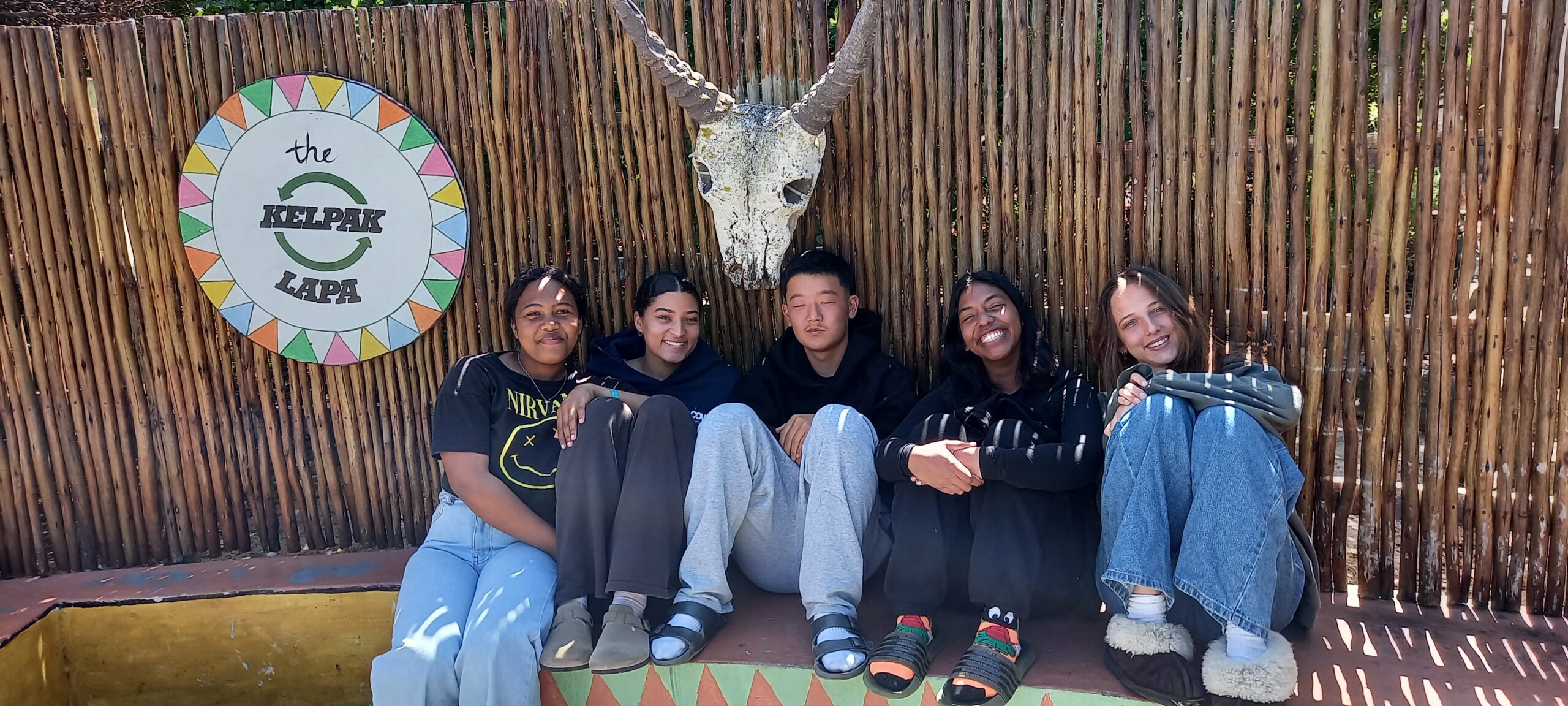
African Traditional Spirituality – Schools Program

2025 is the second year that African Traditional Spirituality has been part of the Grade 10 CTII Schools curriculum. A deep dive into Interfaith, especially within the African context, must include an exploration of the traditions, practices and rituals that have existed for millennia. To that end, CTII is honoured to have the support and input of Dr Christie (Gogo Bazimile) van Zyl who works as the University of Cape Town’s first indigenous healthcare advisor within the Student Welfare Services.
Bronwen Foster

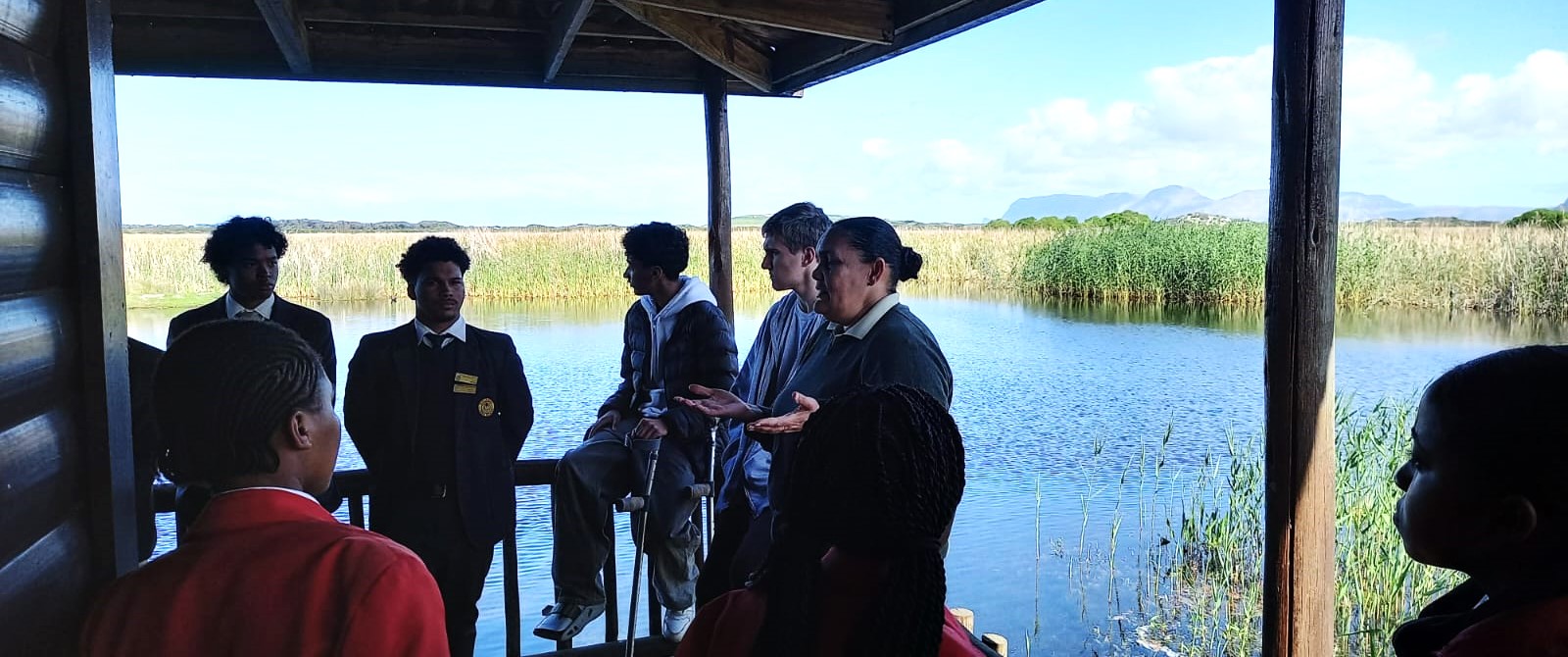
First, we made the most of our beautiful surroundings. We had decided to hold the session in the Rondevlei Nature Reserve (25 Aug 2025) to provide our learners with the opportunity to feel closer to our natural environment. We were generously welcomed by Bronwen Foster, Conservation Officer for The City of Cape Town, who spoke about the importance of nature reserves and protecting the environment for the good of all.

The evidence of how we humans and all other species often co-habit unsustainably was clear: the encroachment of urbanisation, development, and waste upon the wildlife and indigenous plants of the vlei was obvious to all. We were reminded that ubuntu is in fact our relationship with everything, and our inter-dependent connection with Mother Nature.
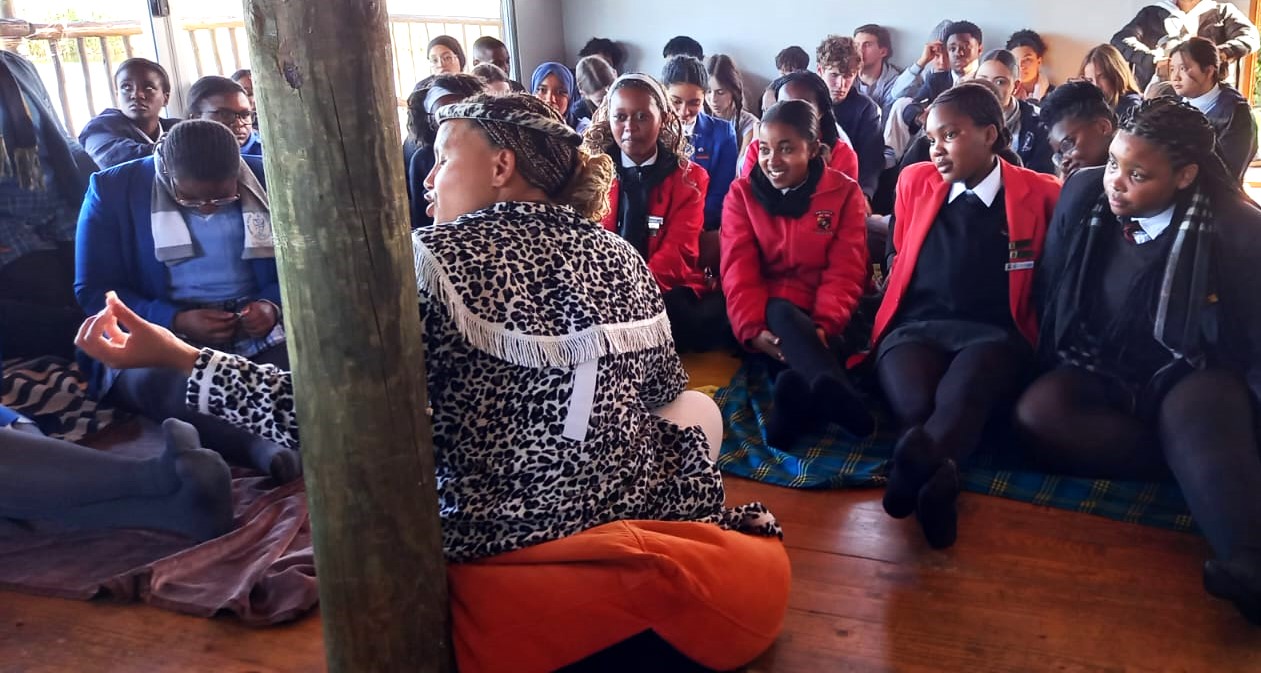
Dr Christie then expertly and lovingly led the learners on a journey of discovery. She held space with great warmth, knowledge and understanding. Her presentation grappled with our complex history, unpacking what African Traditional Spirituality is and the effect that colonialism has had, while also interweaving her own personal stories of struggle and re-learning. A dynamic Q&A session then ensued. We were impressed by how engaged all the learners were – it sparked rich conversation that continued long after the session had ended. Clearly a deep chord had been struck.
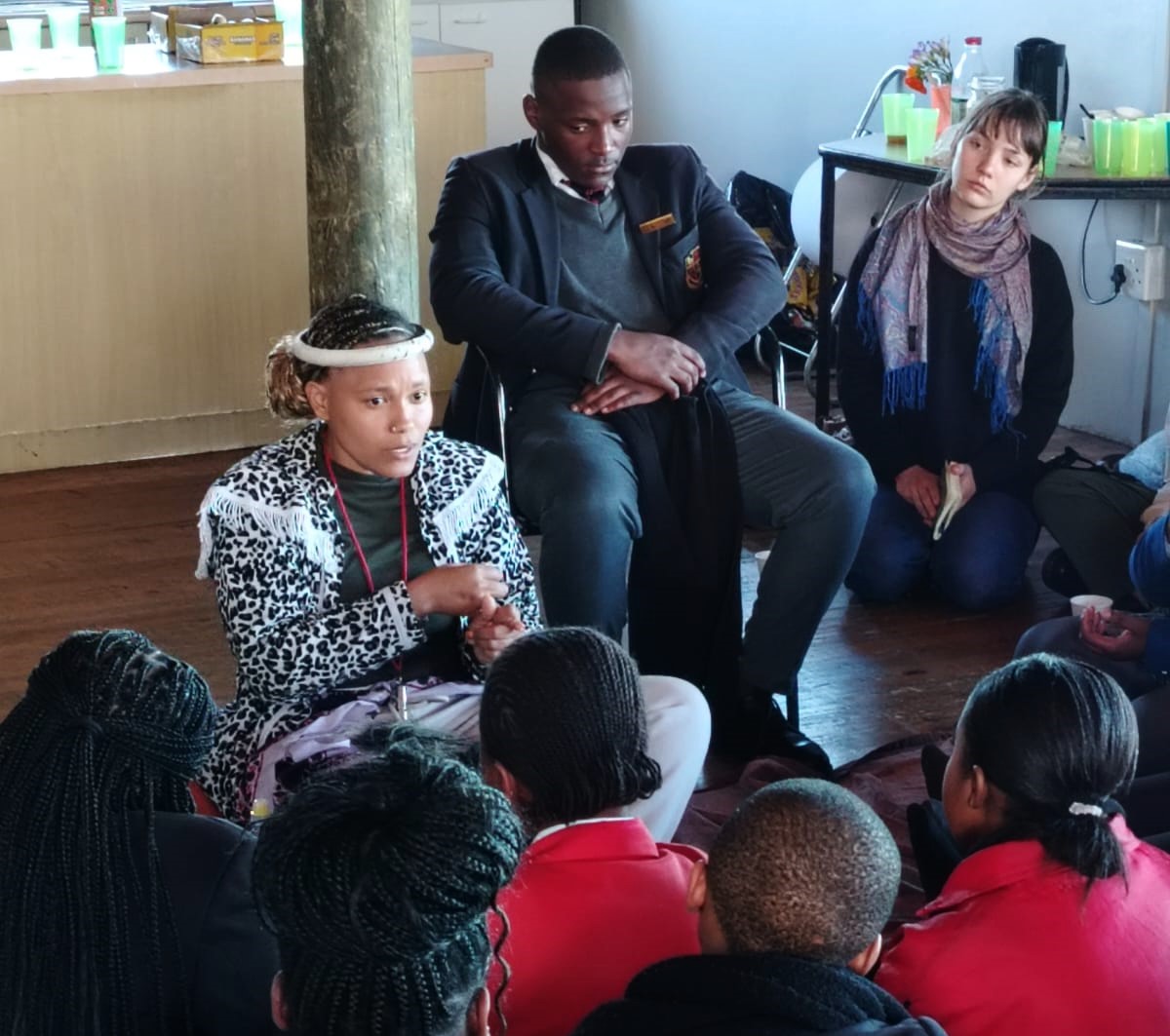
One of our guests to the afternoon was Veliswa Ntsume, a mature student in Christian theology, who remarked:

”These sessions are of great significance to our young, to sharpen their sense of belonging, to iron out any identity-related confusions, and to invite their curiosity and hunger to learn more about themselves, their ancestry and traditions”.

Veliswa Ntsume
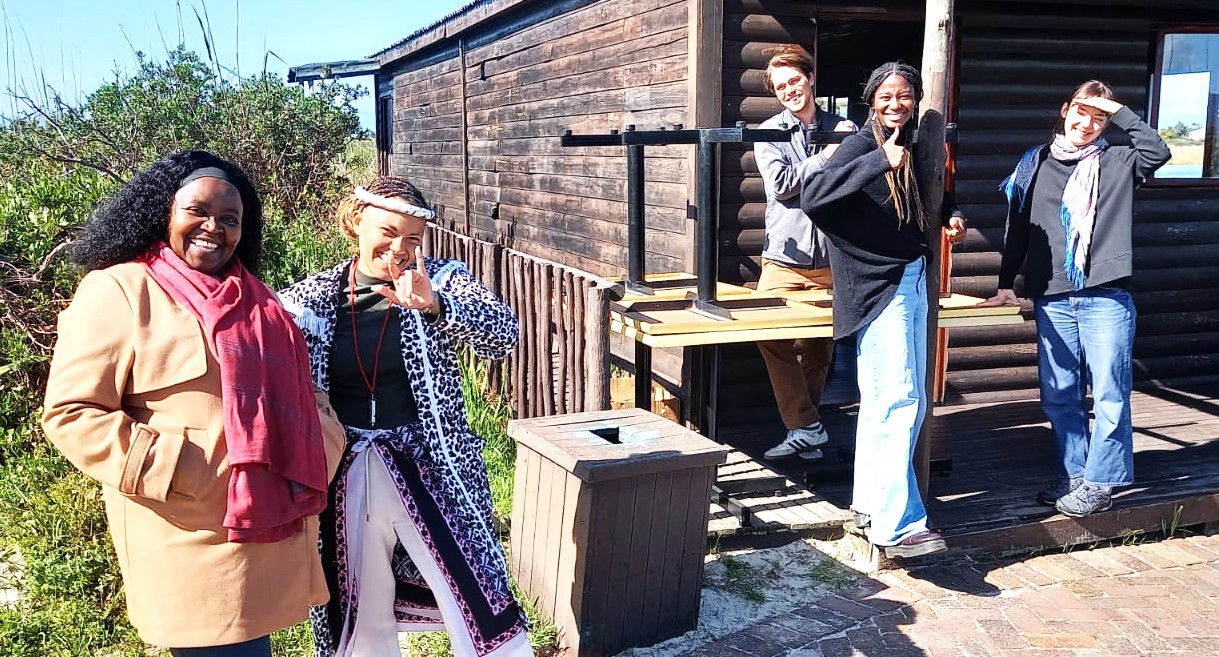
Teachers and supporters: Veli Ntsume, Dr. Christie van Zyl, James Guebert, Whitney Hedlund, Nora Grīnberga

Melanie Slavin, one of the staff from Herzlia, who has been with the Programme since its foundation in 2011, was particularly moved and inspired by the experience.

“I often think of the intergenerational trauma that exists in South Africa and we carry a burden because of it…I have never really confronted the profound impact of the denial and loss of indigenous spiritual systems on people- the severing of connection to spiritual ecosystems  that imposed  individualism and dispossession on a very deep cellular level.”

Melanie Slavin, Hertzlia

 Ann Paton, member of CTII, volunteer on the Youth Programme, and trauma counselling specialist was struck by the questions which the session raised: how do we reclaim that which was discarded and disinherited? A disinheritance which is both subtle and unsubtle. How does one come back to a full identity and allow an ancient knowing? As Ann remarked,

“Today we are all a mix of so many traditions; we are, in essence, interfaith.”

Ann Paton

We were treated to an opportunity to really see, hear and know one another as Africans. The session with Dr Christie gave African Traditional Spirituality its proper place and belonging. So much of our national and global healing, and what is necessary for humanity, rests on the resurgence and preservation of this ancient knowledge. The respect and awareness generated that day was a gift for us all to carry forward in our journeys, both individually and collectively. It’s a hard journey and a brave journey, but a necessary one. 
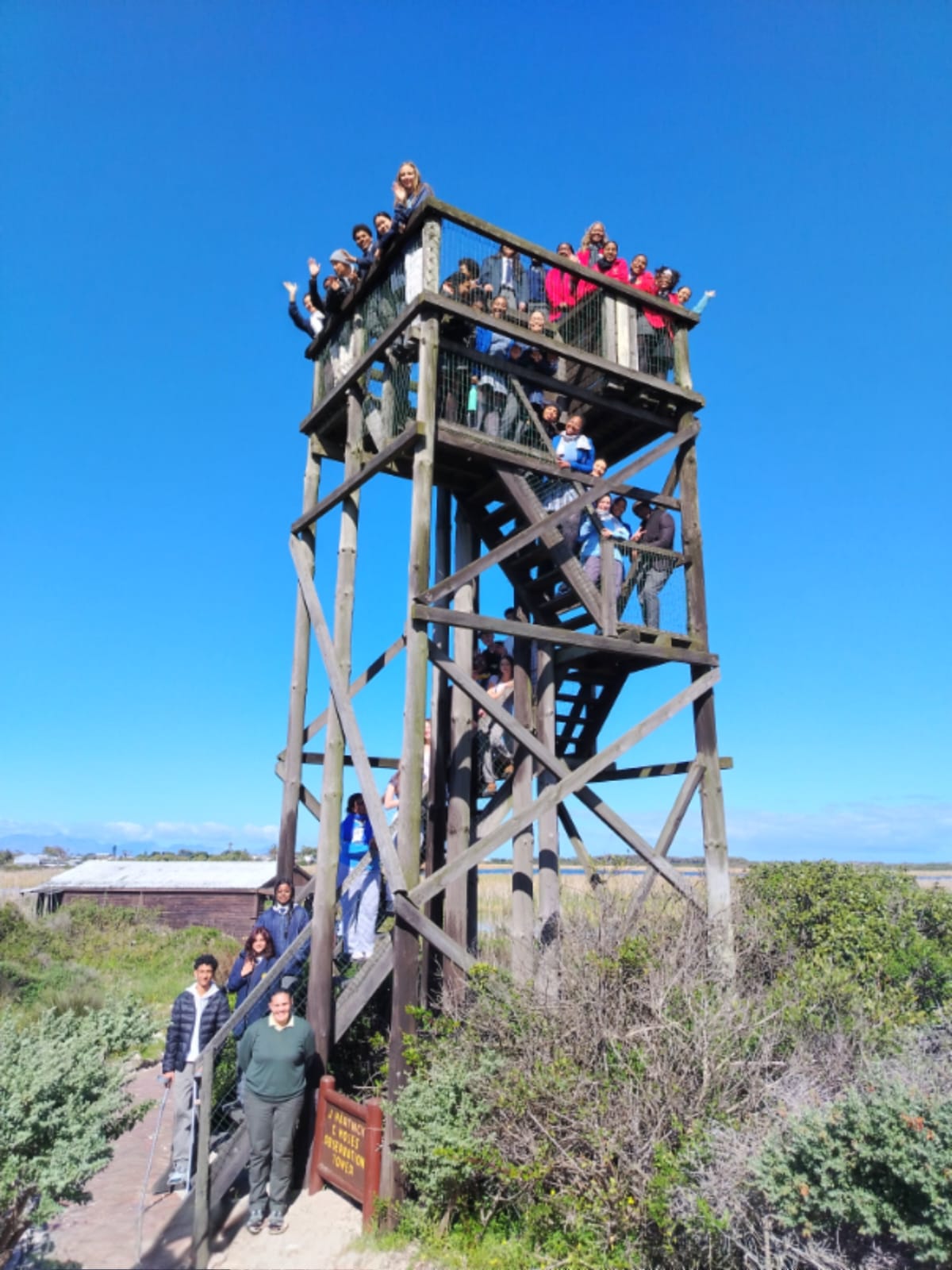
Wind, Sun, Faith and Fun: Soetwater CTII Schools Grade 10 Camp

CTII Schools program held an extremely successful end-of-year camp over the weekend of the 18-19th October 2025. While high winds saw the cancellation of the Cape Town Marathon, there was also good news coming from the gusty Atlantic coast.

35 Grade 10 learners from 7 of our 8 schools spent time at the beautiful Environment Centre Camp in the Soetwater Nature Reserve near Kommetjie.

Thanks and praise go to the CTII’s director of the school’s program (MSYIIP) Pippa Jones and her incredible team, who through exceptional dedication throughout the year designed and curated a relevant, fun, and multi-faith educational experience.

Continue reading “Wind, Sun, Faith and Fun: Soetwater CTII Schools Grade 10 Camp”

3 Dialogues – Sustainability

The 2nd session of our 3 Dialogues series, on “Sustainability”, was held at Turquoise Harmony Institute in Cape Town on the 2nd July 2025. Geordie Ractliffe, a freshwater scientist and activist, and co-founder of the “Sustainability Matters” NGO, spoke alongside Sheik Ismail Keraan, a long-time community spiritual leader of Al Azhar Mosque at the heart of the District Six community.

Continue reading “3 Dialogues – Sustainability”

Prayer is not a part time pass time. It is a full time awareness.

On the 14th May, CTII responded to the call from the The Higher Committee of Human Fraternity (HCHF), calling on religious leaders and faithful around the world to a day of fasting, prayers and supplications for the good of all humanity for an end to the novel coronavirus (COVID-19) pandemic.

Kirtanya Lutchminarayan, shared these powerful words below as part of this event: 

Namaste, the divine in me greets the divine in you.

On this International Day of prayer I’d like to start by first questioning, what is prayer? Growing up I always wondered whether God would punish me if I didn’t light the lamp, go to the temple or pray daily. But as I grew and learnt and delved deeper into my faith and that of those around me, I realised what prayer is not. Prayer is not a fear-based practice, it is not just specific to a time or place, it is not licensed beggary, and it is not remembering God when it is just convenient to us.

Prayer is not a part time pass time. It is a full time awareness.

The most loved people I have met were those living not out of fear, but with love, those who have questioned and acted in devotion of what was important, those who can say that the sky is the roof of their temple and the earth is the floor. Prayer is in the daily values we live, treating others as your very own. Prayer is the kindness you show to others, it is also your actions once you leave your place of worship. Prayer is thinking about those with less than ourselves and acting to help them, even if their beliefs are different. Prayer goes beyond the seen, beyond logic and rationality and can change you and touch lives in ways unimaginable.

As an environmentalist, taking care of nature is my greatest worship, and as a born Hindu, it aligns with the belief that the divine dwells within every being and in every atom. I believe that the absence of a reverence for life and nature is a major reason we find our world in its current state. The primary cause of the current pandemic is that we are commodifying nature more rapidly than ever before. Head over heart is not a winning formula in this case. Humanity has seen animals as resources, we are discarding the living libraries locked in our ancestors and advancing at a rate faster than we can cope.

Our minds have become enlightened by science and technology yet dulled by a system steeped in power, status, selfishness and. We have forgotten the Fibbonacci, a connecting thread running through us and our planet, the sacredness of everything around us, of ourselves, and what makes us human. Our seemingly small actions have amassed to chaos and we have created a mountain with our molehills. The world around is reflective of our inner worlds and actions.

This is called the Butterfly Effect. The phenomenon whereby a minute localized change in a complex system can have large effects elsewhere. It refers to a situation in which an action or change that does not seem important has a very large effect, especially in other places or around the world: Even slight imbalances in starting conditions, lead to huge final variations in outcome because of the instability of the system. It is sometimes said that the flapping of a butterfly’s wings in one part of the world can cause a hurricane on the other side of the globe. A simple event (a wing flap) can cause a cascade of other events.

Likewise good vibrations, especially collective prayer and intention, can achieve mass benefits for humanity spreading a wave of peace and healing, that we need so desperately.

Indigenous cultures and civilisations like the Mayans, the Incas, Khoi San, Maoris, Native Americans and Indian Rishis all had similarities in their ways of living- they had a reverence and connection with the Earth and each other and this is being eroded in current times. In the book, The Tippping Point, by Malcom Gladwell, he speaks about the ‘The Law of the Few’ which explains that a very select group of people is responsible for the “tipping” of almost all social epidemics. We are those people- global citizens and people of faith – it’s time to keep tapping into our heart intelligence. Heart intelligence is to do with the term “Coherence” which used by scientists to describe a highly efficient physiological state in which the following systems, nervous, cardiovascular, hormonal and immune, are all working efficiently and harmoniously. It is the highest level of function where all our bodies are working together as one at an optimal performance level.

This happens when we use heart intelligence, or “flow of intuitive awareness”. When our emotions and mind are brought into coherent alignment with the heart, our brain and heart are operating in a synergetic way, it almost changes the cellular chemistry in our body and extends our energetic field. We then experience a deeper intuitive inner guidance. In other words, heart intelligence can also be defined as the ability of our heart to sync all of the systems of our body, mind and spirit to bring a higher state of awareness, and to bring more clarity and focus to our lives. When this happens, we can heal, and with this clarity and purity we have the ability for prayers to be answered and to be able to bless others.

Now is the time to use our hearts to heal, to bless, to pray and to act.

To conclude and really unpack what it takes to exude the divinity we so need on our world there are qualities of a divine person from scripture, The Bhagavad Gita. These are: fearlessness, purity of heart, perseverance in knowledge, charity, sense restraint, sacrifice, austerity, honesty, nonviolence, truthfulness, absence of anger, renunciation, equanimity, abstaining from malicious talk, compassion for all creatures, freedom from greed, gentleness, modesty, splendor, forgiveness, fortitude, cleanliness, absence of malice, and absence of pride; These are the qualities of those endowed with divine virtues, and qualities that we can all aspire to for a healed world.

In Sanskrit we refer to Sankalpa, which refers to an intention formed by the heart and mind, but more a vow or commitment we make to support our highest truth. Today may we take a sankalpa of imbibing the above qualities and doing our best to be a beacon of light to those around us during challenging times.

May we have an intention of healing for the world, for our individual minds and collective consciousness, to move toward righteous action and for the best of all beings, so that we may live in peace, safety, health and unity.

Lokah Samastah Sukhino Bhavantu

“May all beings be happy and free from suffering. And may the thoughts, words, and actions
in my own life in some way contribute to that happiness and freedom for all.”

 – Kirtanya Lutchminarayan, 14 May 2020

Interfaith is Earth-hearted

Published in the Spring edition of Link-Up, Berry Behr, CTII Chairperson, reflects on the importance of working together to protect our planet. Read about the Beach Clean-Up in partnership with the UN Environmental Programme, that stood out as an example of interfaith collaboration in cleaning our environment.

Click here to read the full article.

477963e2-48dd-48d8-9c1d-0017808d743b

Photograph (Left to Right): Erik Solheim (UN Environment Executive Director), Berry Behr (CTII Chairperson), Karen Barensche (URI Southern African Regional Coordinator) & Yara da Costa (URI Southern African Region CC Liaison)