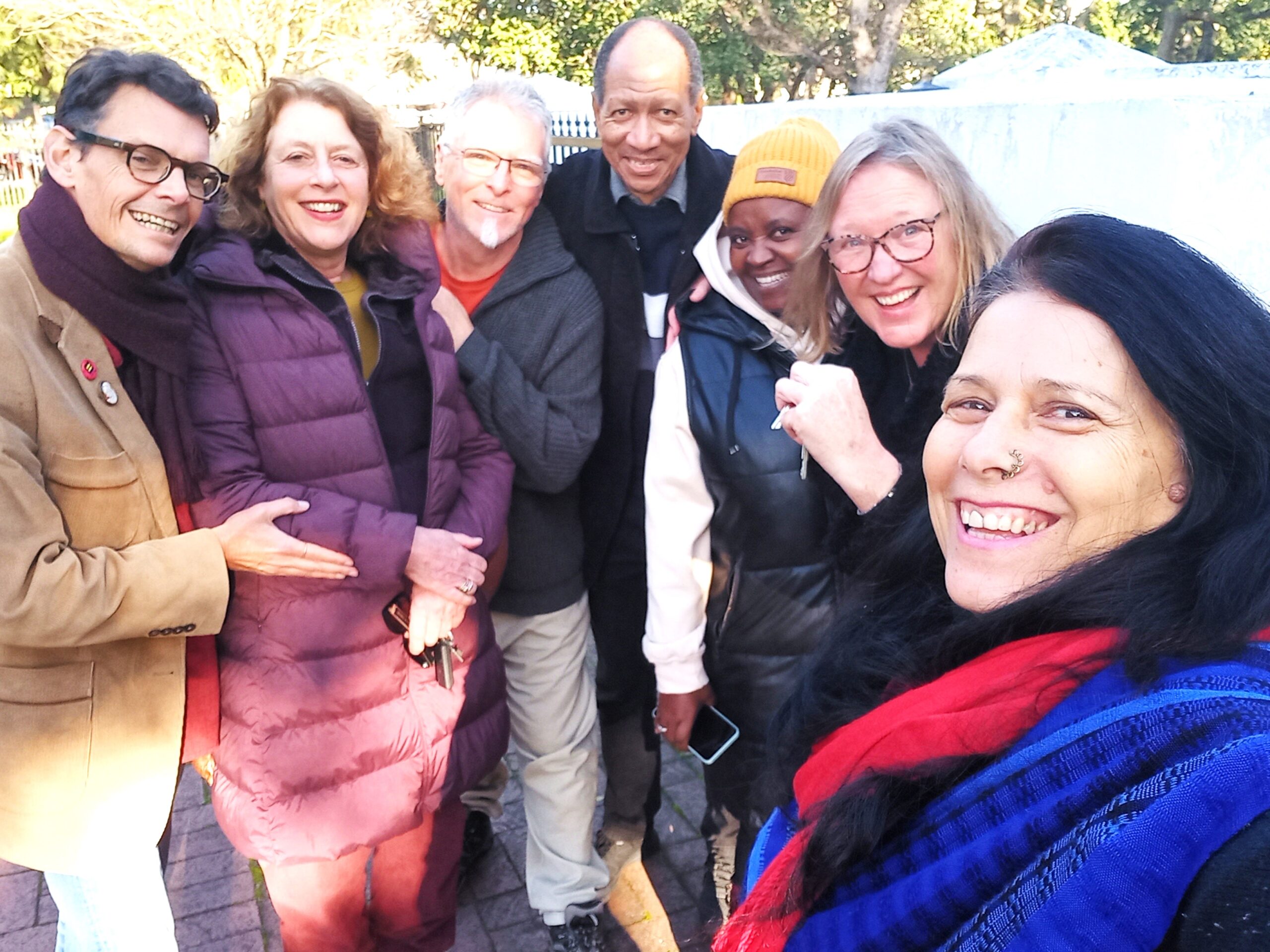
– written by Pippa Jones, Ann Paton and Nic Paton
In relay races, a team only succeeds if each runner passes the baton well.
Life is much the same. None of us starts from the beginning. We inherit wisdom, opportunities, freedoms, traditions and responsibilities from those who came before us. Every generation receives a baton. Our task is not simply to hold it, but to carry it faithfully and pass it on stronger than we received it.
On 6 August, our Grade 11 cohort completed their 2 year journey in the company of 3 special guests: Glen Heneck, Mohammed Groenewald, and Nomfundo Walaza. Our session was called “Passing on the Baton” and the learners had the privilege of sitting with extraordinary people who have run many miles of life’s race. Their task was to ask questions and listen carefully—not just for the story of what they have done, but for the wisdom of how they have lived. As we said, they might discover a lesson that stays with them for the rest of their lives.
Mohammed Groenewald: towards the interfaith of collaboration

“Look at where our country is at and what our country needs most. And what our country needs most is activists that can contextualize the current issues and identify the issues, in a very small scale. Just change one person. Whether it’s interfaith, whether it’s in our community, our churches, our mosques, synagogue, shuls, et cetera, try to make that small contribution.
And so this competitive interfaith, try to stay clear from that. We must move away from the interfaith of competitiveness and move towards the interfaith of collaboration. And that is what I think I want to pass on to you guys. Thank you.
Glen Heneck: We’ve got to live together
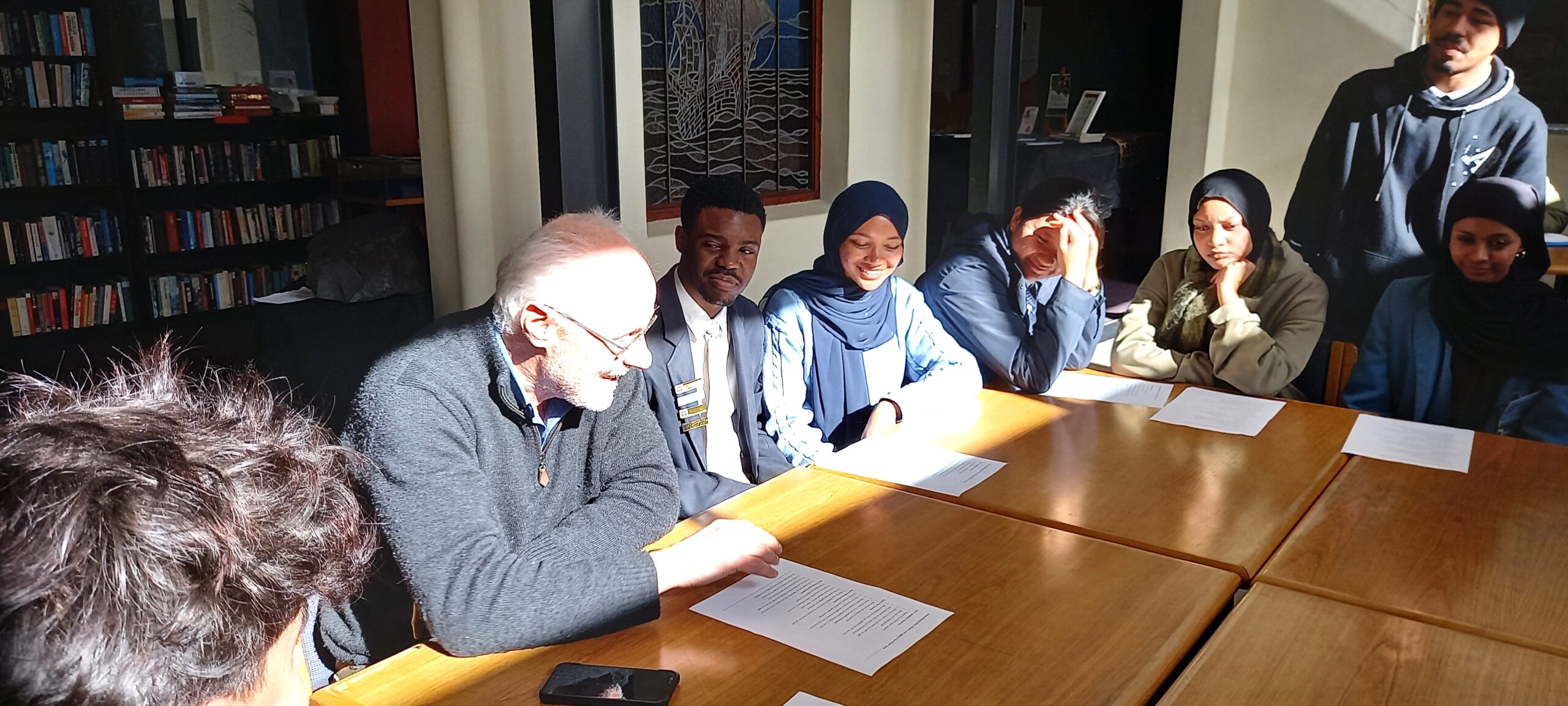
I concur with what I just heard very much. I think that the interfaith space is incredibly important.
We’ve all had very different journeys, both individually and collectively, and got to different conclusions. And somehow or another, we’ve got to live together.
I’m not a religious Jew, but I’m born Jewish, and I’m okay with that. And I’d like you to be okay with it too.
We need each other. We need to live with each other somehow, and we need to find both the language and the way of engaging that’ll bring us peace and harmony, which is what we all kinda want. Peace, harmony, and a bit of fun, right? So that’s, that’s my bit.
Nomfundo Walaza: “You lift as you rise.”
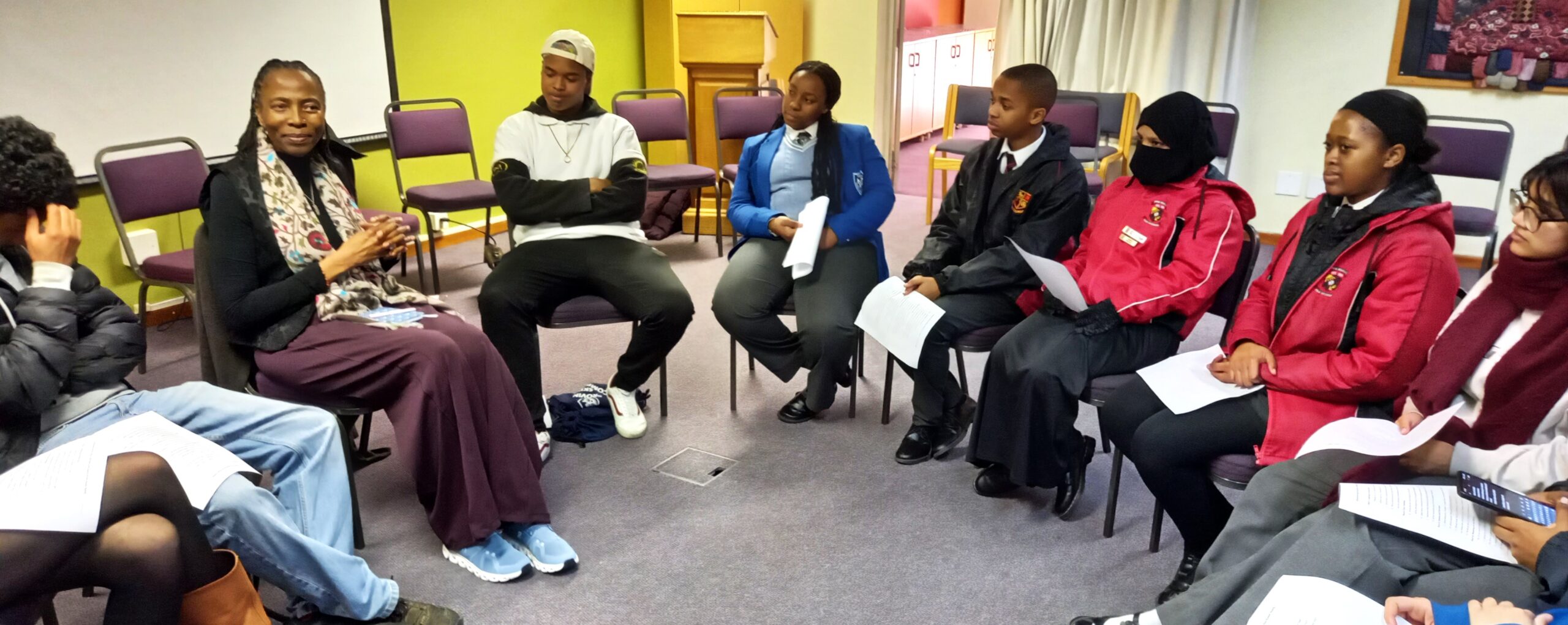
Professor Moyosi, who tragically took his life, once said, “You lift as you rise.” So as you get to be who you are, what profession you follow, please never forget to lift others.
That thing of “push them down in order to survive” never sustains life. When you do things to others that you wouldn’t like to be done to you as a way of getting ahead, it never sustains life.
I’ve discovered in my old age of the value of accompaniment. When you accompany somebody, you walk alongside each other. We don’t walk in front of. We don’t walk at the back to check where they’re going. We walk alongside…they know where they’re going.
Sisindiwe Magona asked , “Why do children, when they’re born [hold their hands in little fists] “Why do you think so?”
“They’re carrying gifts.” They come into the world knowing exactly who they are.
The parent says, “You must be a doctor,” and your gift in here is that you should be a nurse. That’s who they want to be in the world, and that’s what will be helped to bring them into fruition.
And I think just to also resonate with my fellow panelists, we are interdependent. A person is a person through other people. I am because you are. You are because I am.
And if we start from that, and the 1st preamble of our constitution, which talks about dignity, then we’ve got a winning combination.
Ubuntu, dignity, bring them together, then we can count ourselves in the community of human beings as people who are here to live a life worth living. Thank you.
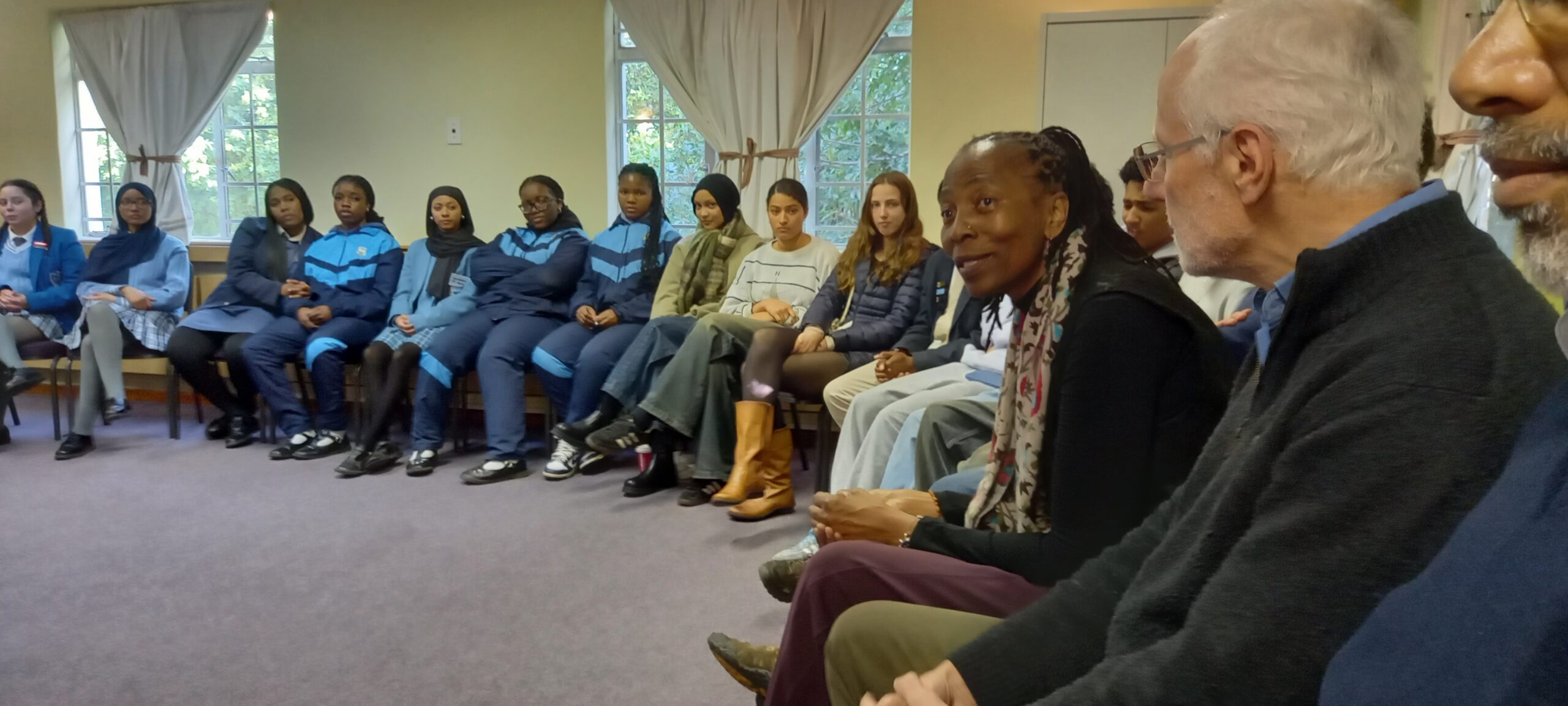
Ann Paton of the of Grade 11 Support Team reflected:
“It was a privilege to witness this coming together of our receptive youth and our three elders. Here was a rare opportunity to listen to consolidated life stories that had the potential to inform their own path and to ask questions. Each of the three tables took time over a meal to eat and share, family style. It was intimate, vulnerable, inspiring and eye-opening. Here the learners were witness to lives well lived, lives that overcame, lives that worked deeply with their personal stories and were able to offer their skills, activism, finances, time and accumulated wisdom in service to others.”
In the words of our youth
As the session drew to close, the learners each expressed what they wanted to take with them from their respective conversations with each of the elders. Here are some of their responses:
- be humble
- love my neighbour
- staying true to myself
- be kind
- dedicate myself to fight for equity
- be grateful for those who fought for us and the privileges we now enjoy
- take nothing for granted
- be considerate
- remain hopeful
- foster a sense of community where everyone is accepted and belongs
- undo what the colonizers have done
- be a good person
- live with compassion
- stick to my values
- believe in the possibility of a better world
- be decent and respectful
- state what I believe in even if it doesn’t favor me
- be an activist
- contribute even if it is something small – big change comes from small actions
- understand and be in my authenticity
- always to ask questions
- be an activist for women
- fight against inequality and social issues
- stay curious.