
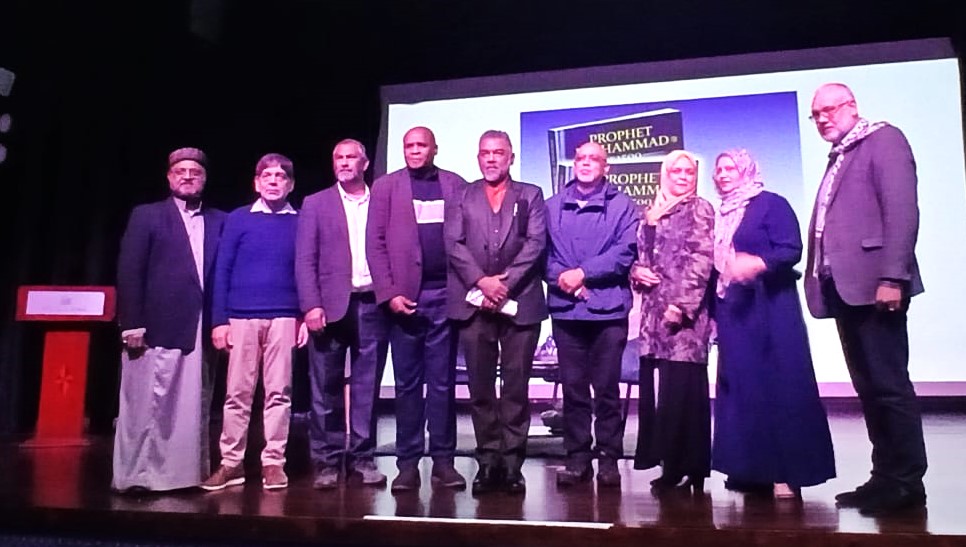
The launch of prof Aslam Fataar’s book, “Prophet Muhammad at 1500” was a mind blower.
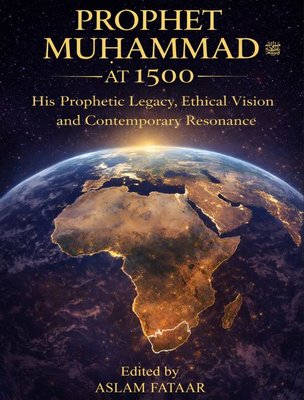
What fascinated me most was the collaboration and the tremendous work of women in writing the book. As a feminist theologian scholar, this immediately raised hope for me towards the recognition of women, their agency and endeavor to serve within our faith spaces.
A discussion by panelists prof Simon, an interfaith ambassador and associate prof from Stellenbosch University, Rev Canon Michael Weeder – former Dean of the St George’s cathedral, and Ambassador Ibrahim Rasool, included storytelling.
Rev Weeder remembered how his mother although not interfaith inclined at the time, used to go to the Islam community when “spoeke druk” and how through that she found comfort, understanding, refuge and solution through receiving help from them. He also narrated how he himself would find peace during prayer time by going to pray at the Kramat than at the cathedral itself.
Prof Simon encouraged embodiment of the text, and narrated historical relation between Christians an the Islam community, some through which Moslems would find refuge amongst the Christians especially during the times of conflicts.
Ambassador Rasool encouraged the Islam community to prepare a ground for dialogue, as the book itself is inviting people for dialogue.
- What ethical guidence do prophetic traditions offer today?
- How should religious traditions respond to violence and inequality?
- What does ethical leadership require in complex times?
- How can faith traditions contribute to dialogue and human flourishing?
